Life & Resilience
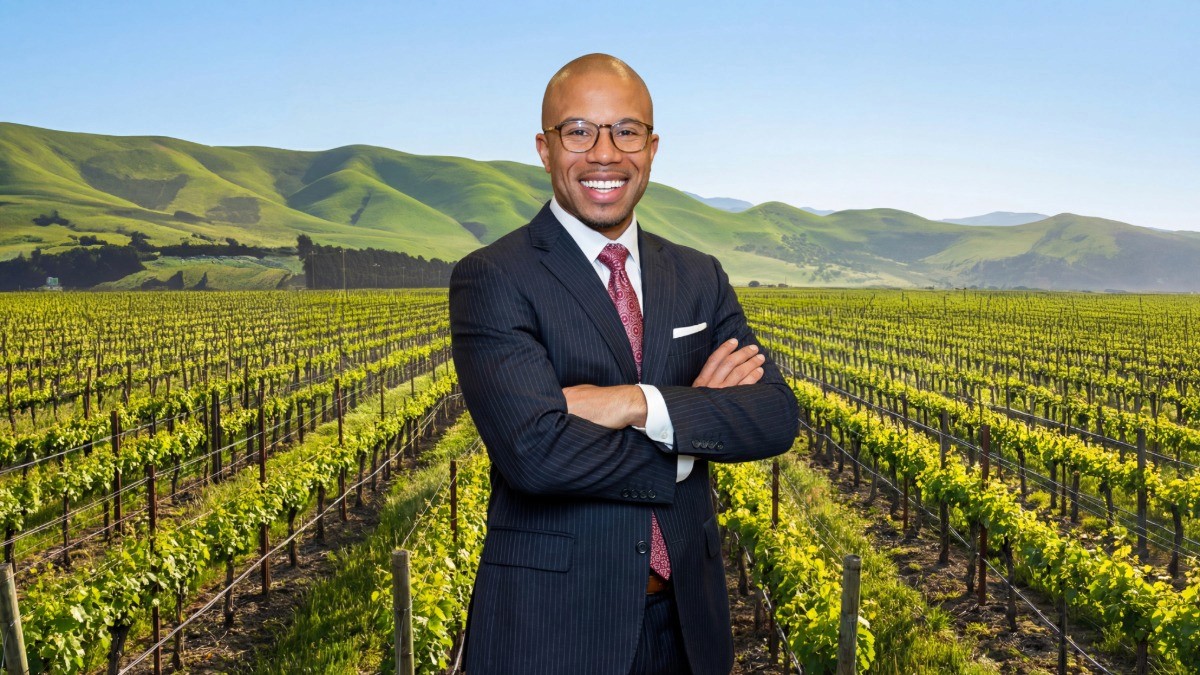

In Episode 15 of Uncorked: Wine, Business, and Life, we sit down with South Jersey legend Adam Taliaferro — whose inspiring comeback from a career-ending spinal injury as a Penn State freshman became one of the most powerful stories in college football history.
After being paralyzed during a game at Ohio State, Adam was told he’d never walk again. Less than a year later, he led the Penn State Nittany Lions out of the tunnel — walking on his own. His journey didn’t stop there.
Today, he’s a lawyer, lobbyist, former NJ Assemblyman, philanthropist, and the founder of the Adam Taliaferro Foundation, which has helped thousands of spinal injury patients rebuild their lives.
Introduction and a Return to Voorhees
Welcome to Uncorked: Wine, Business, and Life with Bill Green. I’m Jerrold Colton, co-host, and we are here at beautiful Saddlehill Winery. It is always spectacular here, Bill.
We are joined as always by a wonderful guest. For me, it’s really special, near and dear to my heart, someone I knew since he was a teenager growing up right around here in Saddlehill.
I gotta tell you, I’m a little starstruck, to tell you the truth. I grew up here. I know your story. I raised my family between Voorhees and Cherry Hill. We were heartbroken for you when that happened.
But they say strong survive. Strong get stronger. Man, you are the picturesque individual for that saying. Your picture should be right next to it. I just want to commend you for your career and what you’ve done and how you’ve overcome this.
We have with us, in case people don’t know or didn’t see the tape beforehand, Voorhees legend Adam Taliaferro. Now he’s transitioned a little bit south in South Jersey, but he is really a legend here, a legend in the state that neighbors us.
He spent five years at State College and grew up here as just somebody that was loved, a beloved athlete and person. I got to know him, Bill, because I had young children who I would take to high school football games where Adam was a star. They would wait for him at the locker room and carry his helmet across to the field.
We go way back. He is still the same wonderful, upbeat, down-to-earth person he always was, but his journey has been quite interesting. Adam, Jerrold, Bill, thank you for having me. It’s an absolute honor and privilege for me to be here today and it feels like I’m back at home.
Let’s just start with how close to home you are. You grew up a stone’s throw away, just a few miles down the road. We are here in Voorhees, and you knew of this farm way before it was Saddlehill.
Bill, I remember vividly driving past this place all the time as I grew up ten minutes from here in a small neighborhood called Sturbridge Lakes. This has always been a beautiful property. To see what it is today is amazing. It really is.
Your kids wound up going to the same middle schools. There is a lot of history. Our producer, Tyler Costantino, went there as well. His brother was friends with your younger brother. There’s a lot of connection here.
That’s the really cool thing about growing up in Voorhees and Cherry Hill. Everyone knows everybody, and it’s a big, family-type community. I miss it. That’s why I’m so excited to be back here today.
Life Lessons Through High School Sports
Before we get to your real sport, you played basketball at Eastern High for longtime, really great coach Dave Alvine. But you had him as a young coach when he was about 26 years old. It was his first head coaching job. Dave was only ten years older than us players at the time.
I tell people all the time, Dave Alvine was someone who taught me so much about life through basketball. I appreciate the life lessons that he instilled in us at an early age. At that time, you’re like, "What the heck is he talking about?"
As we grew into adulthood, you realize a lot of the stuff he said applied to being a good person and a good man. He’s done it with my kids and so many of our friends' kids. He’s really been an incredible presence here in Cherry Hill now, as well as what he was in Voorhees before.
Someone, if you ever knew him or played for him, he’s your guy for life. That’s the coolest thing about "DA," as we call him. It doesn’t matter if you played for him at Eastern or Cherry Hill East. Every guy that’s played for Dave always comes back.
He just got inducted into the South Jersey Basketball Hall of Fame about three or four months ago. The room was filled with Dave Alvine supporters. Guys that played for him, guys he played with. Dave doesn’t like to be recognized, so it was really neat to see him have his night.
The connection with Leon Rose also, who is our good friend and the president of the New York Knicks and a Cherry Hill East Hall of Famer himself. His son Sammy played for Dave Alvine. There’s just so many connections.
You mentioned what he meant to you as a coach and a mentor. I feel like a youth coach can make such an imprint on young people’s lives. Both young girls and boys, they have a permanent impact that just changes and makes them who they are.
Jerrold, I think you couldn’t be more true with your statement. I was fortunate to have two great parents, but I have friends that didn't have a father figure in their life. DA would just be there.
Even just having early practices, learning how to get up, be responsible, and be on time. Little things that at the moment you think, "Why are we doing this?" But as we all grew up and had to work jobs, you realize he was teaching us a point. You gotta get up, you gotta get going and work whatever job you’re doing.
DA is a guy that I learned even more about after my injury. He was by my side for the eight months that I was in the hospital. He was there every day.
Life lessons through sports. There’s so much we both love about sports, but it really is the relationships and the connections that make you who you are.
I always say in business, if you get an opportunity to hire someone that excelled in team sports, that’s going to be a better employee because they understand the word team. They have mutual respect.
The Life-Changing Injury
Adam, let’s talk about your career. Multiple sports in high school. You started your freshman year. Now you’re playing corner at Penn State. You’re at Ohio State. You’re going to make a hit. I’m sure you remember it vividly.
This September will be 25 years since that injury. But I vividly remember it like it just happened yesterday. I was playing defensive back and as a freshman, you just want to come in there and make an impact.
We were getting blown out; Ohio State was beating us 45 to 6. I went in to make a tackle. It was a tackle I’ve made hundreds, if not thousands, of times before. And I made the cardinal mistake.
When you’re playing football, the first thing you are taught is to hit with your head up. Unfortunately, I had my head down. I went in to make the tackle and I just remember waking up on the ground.
I tried to roll over to get up, and I said, "Oh, my God. I broke my arm," because I couldn’t move my arms. I went to gather my legs, and I couldn’t move my legs. I started panicking.
Coach Paterno and our team doctors came out and they said, "Can you move?" And I said, "I can’t move." But the thought of being paralyzed never went through my head because I never had a stinger before.
I’ve heard of guys getting stingers where you lose sensation and within 20 minutes you’re fine. So although I couldn’t move anything, the thought of being paralyzed at that moment never went through my mind.
But the one thing that did was that since the age of seven, my mom and dad have been at every one of my games, even through college. This was the first game we were playing on TV, and my parents stayed in Voorhees to watch.
I’m not the biggest guy in the world, so my mom never liked football from day one. She was always worried about me getting hurt. When I’m laying there on the field, I’m like, "Oh, my God. My mom is going crazy right now because she’s watching this on TV."
I just wanted to try to give a thumbs up while I was laying there just to let her know I was okay. When I couldn’t give the thumbs up, that’s when I realized.
Critical Medical Care and Recovery
I recall the video. You did move your arm. The announcer said, "He just moved his arm." Then the stretcher’s out. Talk about what the Ohio State med team did that was really saving for you.
The injury was horrible, but everything that happened after it was a blessing. I got injured at Ohio State, and right across the street from the stadium, they have a nationally recognized spinal cord center at the hospital.
Literally, they just had to take me across the street. My parents flew in that evening and they took the CAT scans and X-rays. They said he severely bruised his spinal cord.
My dad was there, and they said he's not going to walk again due to the severity of his injury, but they were going to do surgery. I got injured on Saturday; they let me rest on Sunday, then we had surgery on Monday.
I had a world-renowned spine surgeon, Dr. Gary Rea, in Columbus, who did a fantastic job and gave me the best chance for recovery. But where my recovery began was on the football field.
Our trainers and Ohio State’s trainers were textbook. They did everything perfectly. They didn’t move me. If you look at the film, my teammate comes to reach and pick me up, then he backs off.
If he would have picked me up, I would have been done, because they would have moved me and I would have done more damage to my neck. But he stopped. They got me stabilized.
If this injury would have happened in a car accident, I’d be in a wheelchair or I would have passed away. But I got injured in the best spot. They got me across the street and had my surgery there.
Then they airlifted me back to Thomas Jefferson Hospital with Dr. Alex Vaccaro, who’s one of the best docs in the world. I was there for three weeks in intensive care. Then they took me to a place called Magee Rehab.
It was a place I had driven by a million times before and never knew what it was. When I get in there, I’m looking around and I see people with halos on and breathing machines. I’m thinking I can’t believe I’m around all these disabled people, not realizing that was me.
I’m one of those disabled folks. I get there and they take me to the top floor. That’s the first time it really hit me that I was injured. I remember just breaking down saying, "Why me? Why did this happen?"
My dad told me he was waiting for me to cry because I hadn hadn’t shown any emotion. I just let it out. And he said, from this point forward, we’re going to do everything we can to get better.
The Power of Positive Energy
You were in Columbus for a week. At that point, obviously, you’re in bed and not able to move. It’s funny how you still didn’t look at yourself as being injured or disabled yet. One of the things that helped you was your total positivity.
You have had an aura since I met you as a young teenager. You never let that negative thought process enter your head, did you?
Jerrold, it’s hard for me to take that credit because there were times when I was just like, "I can’t believe this happened." As soon as my parents got there, they were like, "You’re going to walk again."
They knew how bleak the prognosis was. They made the decision not to tell me that. The doctors told them he had maybe a 3% to 5% chance of ever walking again. They made the decision not to share that news with me.
They knew how bad things were, but they would walk in the room smiling. "Hey, you’re going to be all right." When you see your parents telling you you’re going to be okay, you’re like, "You know what? I’m going to be all right."
My dad would say every day that we’re just going to take it one day at a time, and every day we’re going to try to get a little bit better. My mom was like the drill sergeant. She was like, "No one’s coming in this room and telling him he’s not going to walk again, or you have to deal with me."
When they airlifted me back, all my friends from around here were coming to visit me. She would tell them before they came in the room, "No one’s going to cry. No one’s going to be upset. Adam’s still the same person. When you go in there, treat him like he’s fine."
So my entire time, I’m sitting there thinking I'm going to be all right. My girlfriend’s there, my best buddies, they were joking around. The negative side of things never crossed my mind because I always had such positive energy throughout the entire experience.
Joe Paterno's Presence and Mentorship
One of those people who was a frequent visitor was Coach Joe Paterno. Talk about what he did while you were going through this whole thing.
The thing that I admire so much about Coach Paterno is that as a freshman, you were usually to be seen and not heard. He gave me the opportunity to play as a freshman, which I totally appreciated, but I still didn't have that strong relationship yet.
When I got hurt, he stayed with me in Columbus, and then he would come every Thursday. He would fly from State College to bring an assistant coach and three or four of my teammates just to come check in on me. This was during the season.
Every time he would come to the hospital, it was like a celebrity was there. Coach Paterno's in the hospital! But the way that he interacted with every patient there who was going through the same thing I was, he would take time to stop by every room and sign every autograph.
He didn’t want to take any pictures because he didn’t want it being about him. I just realized how truly special he was and how much he cared about anyone going through adversity.
When I got back to Penn State and could no longer play football, he became my biggest supporter to help me navigate what I wanted to do next.
The Breakthrough in Rehabilitation
You got injured in September of 2000, and you were back in State College in July for the summer session. But let’s talk about how you couldn’t move. Full quadriplegic, no movement below the neck. How long did that last and what changed?
It was about two months, eight weeks, where I couldn’t move anything. I was at Magee at that time. Every minute of the day, I would try to remember what it was like to move something.
My mind would say, "Move your finger," and I would try to think and nothing would happen. Try to move a toe; nothing would happen. About two months in, my nurse was in the room with me at about ten o’clock at night.
She says, "Adam, your toe’s moving at the end of the bed." I said, "It is?" because I had become so accustomed to trying to move and nothing happening. She said, "Try to do it again."
I’m straining and I’m able to move my toe. They call my parents back to the hospital. At eleven-thirty at night, we call Coach Paterno. We wake him up. We call Dr. Sebastianelli, our team doctor. "Adam’s moving his toe!"
It was a celebration in the room. But what I didn’t realize is that nothing is official unless the doctor sees it. The next morning, the doctor comes in and says, "Adam, we heard the great news. Show me what you were doing."
I remember looking up at the doctor, I’m looking down at my toe, and I’m straining, and nothing happens. I went from the highest point of my recovery back down because I realized the doctor didn’t really believe that I was moving. He turned his back and walked out with his team.
At that moment, I said, "I know my toe is moving. I’m going to do everything I can to prove this doctor wrong." That’s when I went into overdrive.
I tell people I had these five-foot-six women that were tougher than any football coach I ever had. They pushed me. We would do two hours of therapy in the morning, two in the afternoon, two at night. Six hours of therapy a day.
Eventually my finger started to move a little bit. Then I finally was able to get that controlled movement in my toe. I said, "We got something now."
I got involved in a clinical trial at that time where they put you on a treadmill in a parachute harness so the harness holds your body weight. I had four therapists, one moving each leg and each arm, simulating the walking motion before my body could even walk.
I feel like that really helped the brain and the body connect. After I started getting on that every day, things started to progress. Now it’s the standard of care. If you have a spinal cord injury and you go to Magee, you’re going into that parachute harness.
The Resilience of an Athlete
I’m just trying to picture Adam, the 18-year-old superstar athlete who had an NFL career ahead of him, and now all of a sudden you're lying motionless. What went through your head during those months?
I’m so thankful for the community here in South Jersey and the Penn State family. I’d be lying if I didn’t tell you that when my parents went home at night and I’m laying there in bed, I would just think, "What am I going to do?"
I can’t give up because my parents are here every day pushing me, but this sucks. I’m just sitting here unable to move anything. My dream of playing in the NFL is done. Every day was just saying, "Man, this stinks."
But then it came a point where I said, "I can’t change what happened. Only thing I can do is change my future." In a rehab facility, you hear all types of stories. I’m in there with guys in gangs who got shot, or a guy that just fell out of bed and broke his neck.
I started thinking about it and realized I got injured doing something I loved. No one did this to me; ironically, I did it to myself. I’ve got a lot to be thankful for.
The mental side of it was the toughest part. Once I got in the mindset that I’m an athlete and I’m going to attack my physical therapy like it’s football practice, things changed.
It taught me a lot about patience. You tell your leg to move, and it may take 10 minutes to get any type of movement. It also taught me a lot about people. I thought it was all about me, but when I couldn't brush my own teeth or get dressed, I realized that in order to get through life, you need people. It really humbled me.
Wine Tasting: Saddlehill Starflower
Adam, you shared with me that you like sweet wines. Today, this episode is a sweet story. Our number one selling wine happens to be what we call Starflower. It is a blend of four different white grapes. Two are grown at our Voorhees vineyard and two others in leased vineyards in Mullica Hill. Give it a try.
That’s good, right? Bill, I feel seen today. Every time I’m out for business dinners, there’s a stigma around my enjoyment of a sweet wine. I told you earlier, I’m a big Moscato guy. This is awesome.
When we were planning this place, my consultants were telling me I really needed sweet wines. I’m a dry red guy, but sure enough, a large portion of our customer base wants sweet wines.
The Miracle of the First Steps
Jerrold, I want to make one final point on Adam’s recovery. Adam, Bill has kept himself in great shape; he does triathlons and was out running today. But to picture what it’s like to have to get your body to move again is hard to imagine. Talk about what happened when you took that first step.
I equate it to a baby taking their first steps, but I got to do it at the age of 18. I had been working for that moment for five months. We take walking for granted, the amount of muscles and nerves that go into it.
When I was laying in bed for months, just standing up made me dizzy. They would put me in a standing frame and crank it to stand me up. I could only stand up for 10 seconds before I felt like I was going to faint.
Once I got my body acclimated to the standing position and worked on the treadmill, they would lower the harness each week so I was carrying more of my own body weight. Finally, they said we could try to take some steps on the surface.
We called my entire family to the hospital. I stood up with a walker and I remember pushing myself up. It was a surreal experience. My left side was always stronger, so I remember picking up my left leg and taking the slightest step. I looked at my parents and was like, "This is it. It’s happening."
I took a small couple steps, probably from me to you, Bill. I remember just sitting back down. I felt like I ran a marathon just from taking three steps on my own. But that was the point where I realized I was going to be able to walk again.
That was probably the best moment of my life. My therapists—Amy Bratta, Mary Grace Mangine, and the whole crew—had put five months of work into me to get me to that point. Without them, none of this happens.
Why Adam Chose Penn State
We have so many Penn State fans in the Philadelphia region. You were a heavily recruited player, Superstar Player of the Year in South Jersey. Why did you choose Penn State? As it played out, you made the right choice for reasons you never anticipated.
Penn State started recruiting me at the end of my sophomore year in high school. I went to football camp up there, and something about Happy Valley just felt right. Coach Paterno was just a genuine person.
My recruiting coordinators, Tom Bradley and Kenny Jackson, who was a South Jersey guy, just believed in me from the very beginning. They didn’t BS me.
It came down to Penn State or Tennessee. I remember going to Tennessee, and the stadium is right on the water. SEC football is life down there. They set you up with a full-time tutor, and I thought that could work.
But my dad saw that and said he didn’t know if that was the place for me. I had committed to Penn State early and he said I had to keep my commitment. Football is a great avenue, but he wanted me to get my education as well.
Coach Paterno made it clear you’re going to play football, but you’re also going to go to class. Also, Penn State is three and a half hours away. I wouldn't have to get on a plane to come home.
A Heroic Return to the Field
It's the fall of the following season, 2001. You’ve beaten the odds and you're back on campus. You’re no longer a football player, but still part of the program. What did Joe Paterno do for you?
The first day I got back to campus, he called me into his office. Usually, that was a place for someone in trouble, but he said he was happy to have me back.
He set the ground rules. I was going to do everything except play on the field. I was going to come to all the meetings and all the practices. I became a student assistant coach for defensive coordinator Tom Bradley. I did the defensive signals during the games.
Penn State even asked my therapist to come up there for a few days to show the strength coaches the exercises I was doing. They took the time to create a specialized training program for me.
When I was still unable to walk, about a month after my injury, Tom Bradley said, "When you come back, we want you to lead the team out of the tunnel." I remember laughing at him, but he was serious.
On September 1st, we were playing the Miami Hurricanes. They were one of the best college football teams of all time. It was a night game. We rode the blue buses to the stadium. Coach Paterno had me sit in the front seat next to him.
I remember walking off the bus and seeing a sea of people with "43" signs, which was my number. Adrenaline went through me. I was still walking with a cane at times, but getting off that bus was the best I ever felt.
I hadn’t done any running up to then. My therapist told me to go slow because it was about a 50-yard walk. I remember walking onto the field and I had never heard the stadium that loud. They announced my name and the whole place erupted.
I got out to the 10-yard line and something went through me. I was able to run from the 10 to the 20-yard line. The crowd was unbelievable.
I was in my house watching on TV, and I just stood up and started clapping and crying with my family. It was a victory that could never be measured.
For me, that was just my thank you to so many people. I had received cards every day, people had prayed for me, and so many who focused on my recovery were in that stadium.
It was my way of saying I’m okay. The injury happened, but we’ve overcome it. Sharing that moment was something I’m so thankful Penn State gave me the opportunity to do.
Transitioning to Law and Lobbying
After that, I still had to go to school and figure out what I wanted to do with my life. Coach Paterno called me in and asked what I wanted to do. Our team academic guy, Todd Kulka, gave me a test that said I might be interested in the law field.
Coach Paterno told me that before he got involved in coaching, he had thought about going to law school. He connected me with whoever I needed to pursue that career.
I wanted to potentially represent my teammates in the NFL. I did a summer internship with Jerrold and learned that being an agent isn't just signing big contracts. Then I spent the other half of the summer with the NFLPA because Doug Allen was a Penn State guy.
I realized the law was interesting, but I decided to go the corporate route. I went to Rutgers Law School and then went to work for the global law firm Duane Morris.
I’ve learned it’s a lot of times about the relationships you make. Gil Brooks was the head football coach at St. Joe’s Prep and a lawyer. When I got out of law school, I got in touch with him. He was a partner at Duane Morris and he brought me over.
I started my career there, and a guy by the name of Hersh Kozlov, who runs the Cherry Hill office, took me in. I was a labor and employment attorney for about five years and then went in-house with a pharma company.
I realized I didn’t want to sit in an office all day writing legal briefs. I love meeting new people, so I gravitated towards the lobbyist side of things. I’ve been working as a lobbyist for the last 12 years.
Public Service in the New Jersey Assembly
You also had a nice career in South Jersey politics. Senator Beach was the first person that suggested it. I told him I wasn’t a politician, but we eventually moved to the Swedesboro area and I got to know Senator Steve Sweeney.
He told me his daughter had a disability and that was why he got involved. I had a physical disability and I wanted to be able to help people. I started as a county commissioner in Gloucester County for about six years.
Then an assembly seat opened up. Steve asked me to be part of the team in Trenton. I was fortunate enough to serve in the General Assembly for seven years.
The Adam Taliaferro Foundation
I want to talk about your foundation because it’s awesome. You have this tragedy, but you turned it into a positive. There was the book, *The Making of a Miracle*, by Sam Carchidi. Talk about the start of the Adam Taliaferro Foundation.
When I was going through my injury, people started donating because they thought I would need lifetime care. Lo and behold, I’m able to walk again and I didn’t need those funds.
My high school football coach, Larry Ginsburg, and some other coaches here in South Jersey said let’s try to do something good for those that aren’t as fortunate as I was.
What I saw in the hospital was that I had people coming every day, but my roommate might get one visitor a month. We created the foundation to provide financial and emotional support.
When you go through an injury, insurance doesn't cover retrofitting your home to be wheelchair accessible. Our foundation steps in where insurance steps out. If you need a van or a ramp or your bathroom remodeled, we are there.
My role is to say, "Hey, I know what you’re going through. Let’s talk about it." Tom McAvoy is our president, and we’ve got a wonderful working board. We just celebrated 25 years and we’ve given over $3 million of support to people.
Inspiration from Christopher Reeve
There’s a very famous actor who got hurt just before your injury, Christopher Reeve. Talk about your experience with him and his wife.
I was sitting at Magee and someone said Christopher Reeve was on the phone for me. He said he had a similar injury and he was rooting for me.
He severed his spinal cord while I had severely bruised mine, so the likelihood of him ever walking again was slim to none. But he told me when I got out of there, he wanted me to come up and work out with him.
I would go up to his house in North Jersey. Watching this guy work out like he was going to walk tomorrow was inspiring. He didn’t let the outlook deter him.
Here I am feeling bad about myself, but I’m up walking while he's struggling and can’t breathe on his own, yet he always had a smile on his face. I told myself I was never going to let this injury get me down after seeing what he put into his recovery.
He and his wife Dana were just great people. For them to take the time to allow me to come up there is amazing. He still serves as a source of inspiration to this day.
Family Life and Future Hopes
This is a wine we haven’t tried on the show before. These blueberry grapes are from Hammonton, New Jersey, the blueberry capital of the world. I want to get your opinion. It’s pretty sweet, though not quite as sweet as the Starflower.
I’m just going to keep saying it—this is up my alley. Both of these are awesome. This actually has some body to it. My winemaker dials back the amount of sugar, so I consider this semi-sweet.
Is your wife into sweet wines as well? No, she smirks at me when I say I enjoy a sweet wine. She’s a red wine person. I am a beginner when it comes to all things wine, but I am learning today.
You did wind up marrying your girlfriend from Penn State. She was a swimmer there and she was a year behind me. We got paired up to do a group project in a health class.
We started dating in 2002 and got married in 2011. I’ve got a 10-year-old son and a 7-year-old daughter. That’s my life these days.
Will you let your son play football? I would fully support him. I still consider my accident a freak accident. If someone would have given me a magic pill to go back and play, I would have done it.
The issue is he’s got my wife, my mom, and my mother-in-law saying, "Over our dead bodies!" He plays flag football and he loves it, but baseball is his favorite sport.
If he came to me in high school and said he wanted to play, I’d say go for it. He sees that I still walk with a limp, so he knows what happened to me. I tell him I made a mistake by having my head down.
Football has become a much safer game than it was 25 years ago. It teaches you that when someone hits you, you can’t lay down; you’ve got to get back up.
Current Work with Johnson & Johnson
You’re now at Johnson & Johnson, an iconic and philanthropic business. What does your day look like?
I was at Bristol Myers Squibb for 12 years as a lobbyist. I was traveling a lot, and once my kids came along, I wanted to be home every night. JJ provided a great opportunity where I serve as Director of State and Community Engagement.
I do government affairs work here in New Jersey. JJ is headquartered in New Brunswick and has a history of community engagement there, but we’re trying to do more in South Jersey and North Jersey.
It’s a fun role because I get to interact with legislators I served with, but I also handle the philanthropic side. How can we be giving back to the community from a health perspective?
The Penn State Legacy
You’re in the shadows of Rutgers University now, but you’re still a Penn State guy. What does Penn State mean to you?
People make fun of me because I’m always wearing something Penn State. I even have my "We Are" bracelet. Penn Staters are fanatical, but for me, it means a little bit more.
I look back on my injury and what Penn State did for me. I played for Coach Paterno, but Coach Franklin treats me like I played for him. I go back and speak to the team.
When I got injured, they raised almost $800,000 for my recovery. Even to this day, when I had to put an elevator in my house, they sent a check to cover the cost. They didn’t have to do that.
I only played five games there, but the way they’ve embraced me over the last 25 years has been unbelievable.
I’m totally blown away at your story. Hearing it firsthand from you, I can say we have not heard the last of Adam Taliaferro. You are making this world a better place.
Thank you, Bill and Jerrold. For you to have me here is an honor. It’s all about the people around you that help you succeed. I feel so fortunate and blessed to have so many people pulling for me.
Nobody ever led a team out of the tunnel the way Adam Taliaferro led the Nittany Lions. To you, Adam, and your family, all the best.
Thanks for listening to Uncorked. We’ll catch you next time.