Business Titans
From Running Prisons to Advising BMW: Quinn Spitzer Uncorks '82 Lafite and Hard-Won Lessons
00:0000:00
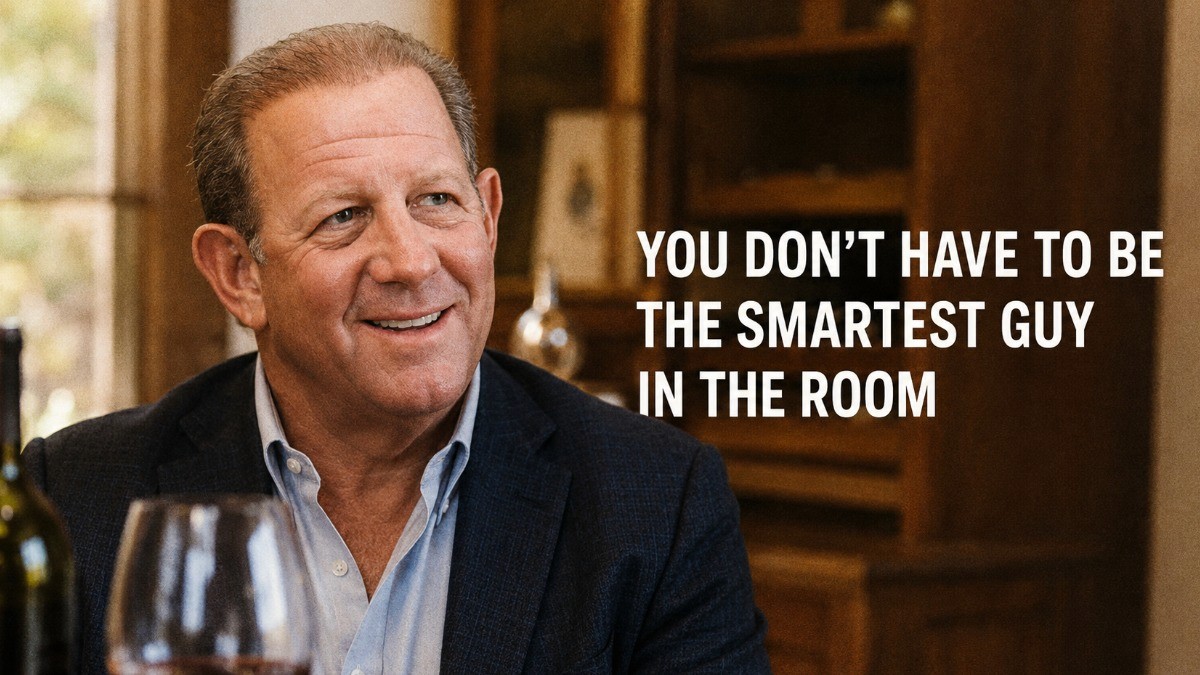
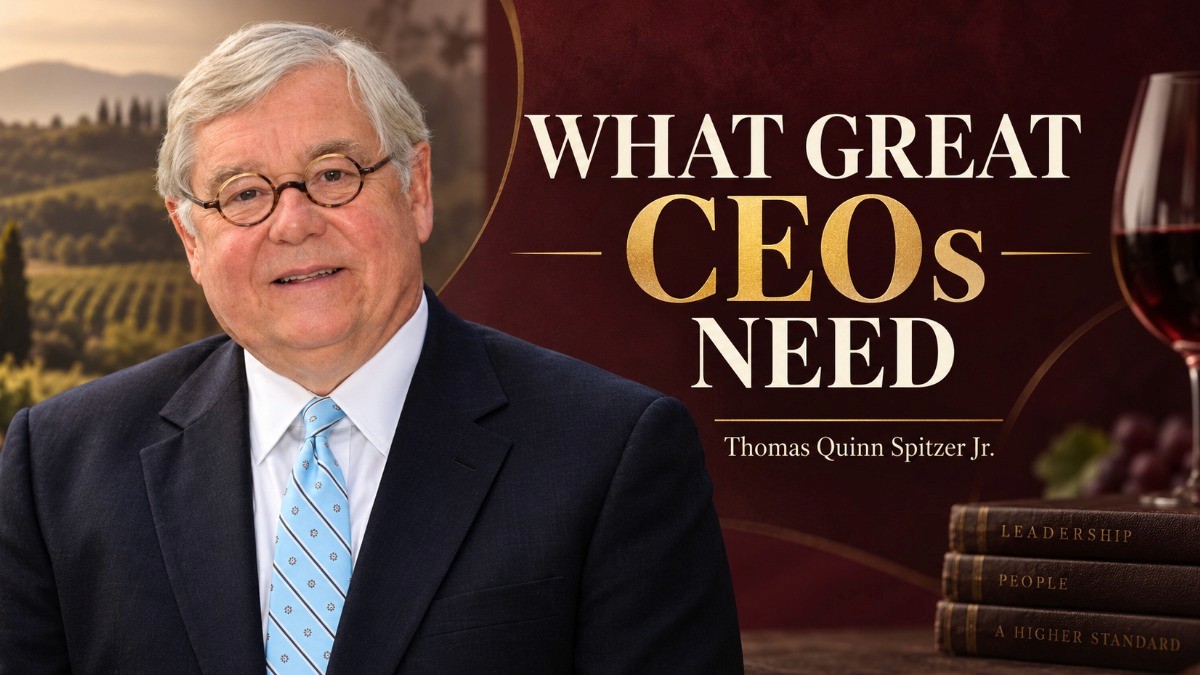
At 22 he was the youngest state commissioner in Georgia history, working under Governor Jimmy Carter. At 31 he was helping run Arizona's prison system, overseeing 17 institutions and nearly 20,000 inmates. Since then, Thomas Quinn Spitzer Jr. has led the consulting firm Kepner-Tregoe, advised the board of BMW since 2008, and counseled executives in close to 20 countries. He's also one of Bill Green's closest friends and one of the very few people Bill will open any bottle in his cellar for. On this episode of Uncorked, Bill does exactly that.
The conversation starts at Quinn's first wine auction in 1981, run by Christie's legend Michael Broadbent, where he bought a case of 1961 Latour for $100 a bottle and drank every drop. He tells the story of a mail-in bid that nearly bankrupted him, the Munich restaurant that had to destroy an empty bottle of Romanée-Conti by contract, and the blind tasting where a Finger Lakes Cabernet beat a celebrated Bordeaux and cost him a friendship. Along the way, Bill and Q taste Saddlehill's The Scribe and Proprietor's Blend, then open a 2011 Harlan Estate and a 1982 Lafite Rothschild, revisiting the Napa trip 26 years ago that first brought them to Harlan's barrel room.
Between pours, Quinn gets candid about what separates great leaders from the rest. He explains why German automakers ignored years of warnings about China, why the best executives are the ones willing to admit what they don't know, how rubber-stamp boards fail the companies they serve, and why most businesses never do the "autopsies" that would keep them from repeating mistakes. He also shares what running a prison taught him about the gap between consulting and actually running something, including a fight with a city manager over the prison's sewage. The episode closes with his work in youth golf and Snider Hockey, and a lightning round answer that says a lot about the man.
Introduction of Thomas Quinn Spitzer Jr.
Bill Green:
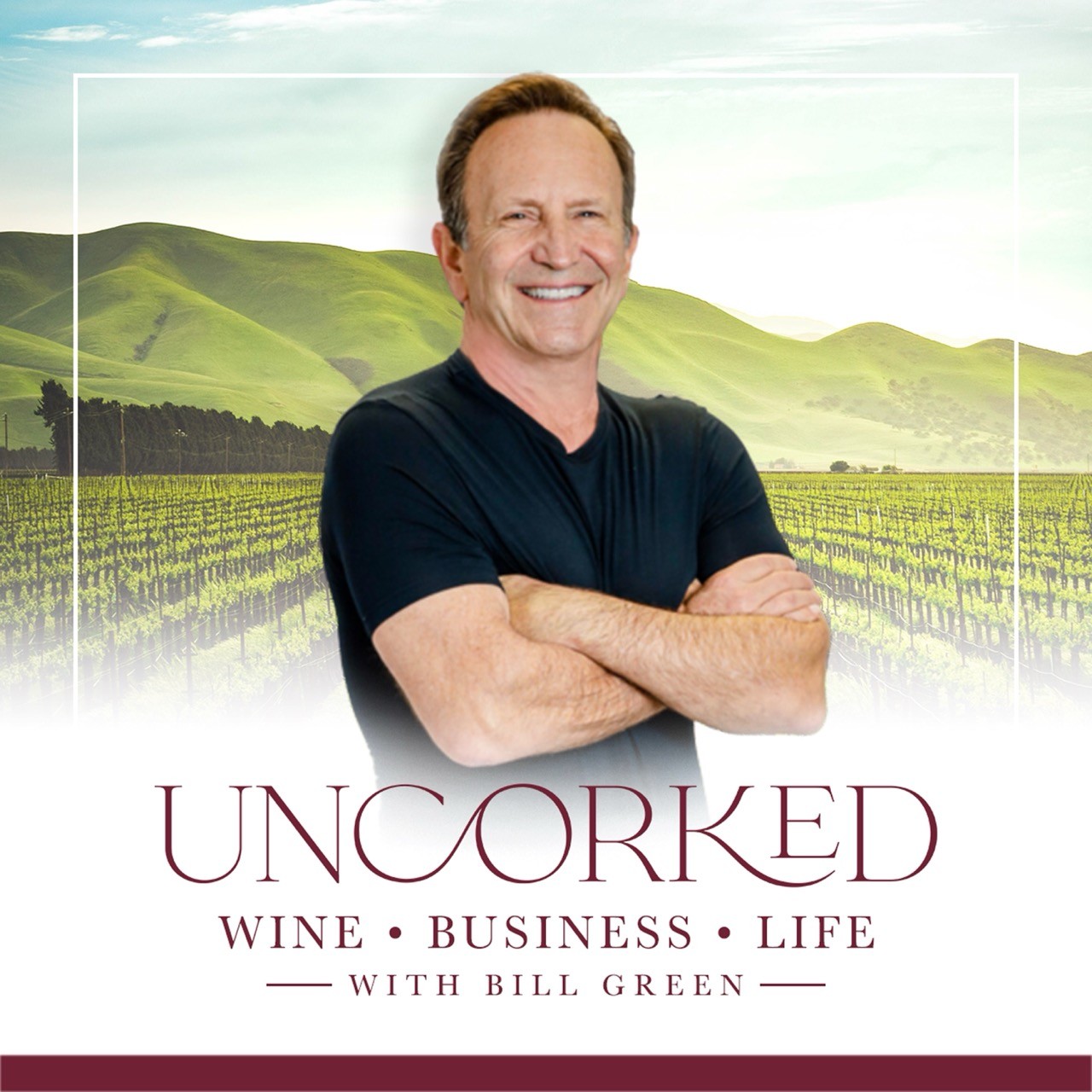
Welcome back to Uncorked. I'm your host, Bill Green. If you know me, you know I'm a big believer you can't wing it in business. And you sure as hell can't do it alone. You've got to surround yourself with sharp minds who give it to you straight. No BS.
Today's guest is one of those rare guys in my life. He's not only one of the sharpest strategic thinkers on the planet, he's also a very close friend and trusted confidant of mine. Look at his resume.
Back in the 70s, at age 22—it was a long time ago—he was working for Governor Jimmy Carter in Georgia, the youngest state commissioner in Georgia history. At age 31, he was deputy director of Arizona's Department of Corrections, overseeing 17 institutions and nearly 20,000 inmates.
He spent 10 years as chairman, president, and CEO of international consulting firm Kepner-Tregoe, co-founded McHugh Consulting, and has been a senior strategic advisor to the board of BMW since 2008.
He's advised top executives at global powerhouses like Corning Incorporated, served as lead director when specialty chemical giant MacDermid went private, and served on the board of medical device maker Accellent up through its sale to KKR. On top of that, he's an author and former CNN business commentator.
Immediate past president—here's the important stuff—of the Golf Association of Philadelphia, and a guy who's been buying fine wines at Christie's auctions since 1981. Please welcome my good friend, Thomas Quinn Spitzer Jr., but as I like to call him, Q.
Welcome to Uncorked, Q.
Thomas Quinn Spitzer:
Thanks, Bill. About 50% of what you said is completely accurate. The rest of the 50% is a little bit off. Candidly, I'm so old, I don't remember which is which.
Bill Green:
Well, it's been a long time, Q.
Thomas Quinn Spitzer:
There you go.
Bill Green:
Quinn's been a friend of mine, I think since about '95, '96, and he's seen a lot of my shit. There are very few people in this world that I will open up any bottle of wine in my cellar for, and Quinn is definitely one of those people on a very short list.
As much as we want to unpack a lot of really cool things about Quinn's business career, which spans decades, we're really going to talk about wine.
Thomas Quinn Spitzer:
I like that story.
Memorable Wine Auctions and Rare Vintages
Bill Green:
So Quinn, in 1981, tell us about this Christie's auction with Michael Broadbent, who's pretty much iconic in the wine world.
Thomas Quinn Spitzer:
The auction was auctioning off the cellar of Addy Bassin, who's very famous because he was the founder of MacArthur Wines in Washington, D.C.
Where he really became famous was two years prior to that, having paid the most money ever for a bottle of wine, which was an 1806 Château Lafite Rothschild, allegedly owned by Thomas Jefferson. Probably not true.
So there was a wine auction. I thought, I've never done a wine auction before, let me see what's going on here. I got myself all set up. It was on October 31st, 1981, at the Madison Hotel. Michael Broadbent, the legend at Christie's, was there to do the auction. I went in with the idea that maybe I'll buy a case of wine or something like that.
Interestingly enough, the person sitting directly behind me was the bidder who won the 1806 or 1814 Château Lafite Rothschild that was on offer. The person who was with me inappropriately turned around to him and said, "What are you going to do with it?" To which he said, "I'm going to drink it."
Afterwards, there was a lot of controversy about that because the rumor was that that bottle was bought in and went straight back to Addy Bassin, but who knows.
What was interesting about that particular auction was that was the first time that I began to realize there was something really special about '47 Cheval Blanc. In all these auctions, they give you a range of what the lot's going to go for. For the '47, all of a sudden people started bidding, and it ended up going for three to four times the price in the catalog.
I'm sitting there going, well, there's something going on here that I don't know about. Of course, since that time, a lot of people consider that the best red wine ever. At the wine auction, I was able to buy a case of 1961 Latour. You'll hate this: I paid $100 a bottle plus the 10% hammer price, and I drank it all.
Bill Green:
Well, that's the sorrowful thing, that you drank it without me. I didn't even know you then.
Thomas Quinn Spitzer:
I would have bought it.
Bill Green:
And that bottle of wine is still good today, and it's probably north of 10 grand a bottle.
Thomas Quinn Spitzer:
I would think so. It's a very fine wine.
Then I did one thing incredibly stupid, and this is something I learned about auctions. Right after that, they did an auction by mail. I thought, okay, let me try to do that. So I went in and I bid on five different lots.
I was in Rock Hill, Illinois, I'll never forget this. I put my bid offer into the mailbox, and literally the moment it slipped out of my hand, I realized if I got all of those lots, I was bankrupt. I had assumed I was only going to get one.
I sweated pins and needles for ages, hoping that I wasn't going to get completely screwed. Turned out I got one lot. It was a split case: six bottles of '53 Latour and six bottles of '66 Haut-Brion. So I survived.
Bill Green:
My first auction was February 1996, a Sotheby's auction. I thought I was doing my homework, and I went to check out and I couldn't keep my paddle down because I'm a pretty competitive guy, as you know.
They said, "Mr. Green, that'll be $56,211." And I thought, fuck, man, this is a two-credit-card night. So yeah, you can get caught up at auctions, too.
Thomas Quinn Spitzer:
It's way beyond what I can afford now. The Chinese drove the prices up so high that now, to go to an auction, I would go to observe and watch what these people are doing.
At the end of the day, I will tell you one thing that's interesting. I was in Munich not too long ago at probably the best restaurant in Munich called Tantris. I was with a friend of mine who recently retired as the CEO of BMW. Fortunately, he was buying.
He bought a bottle of 2012 Richebourg Romanée-Conti. I'm sitting there going, boy, this is amazing—a domaine wine for dinner, and he's paying for it. Gotta love that.
At the very end, I'm looking at the bottle, and the wine steward came over and said, "I'm going to have to take this from you now." We said, "Why do you have to do that?" They said, "By contract, in order for us to get the Romanée-Conti wine, we have to agree to destroy the bottle after it's been drunk." It's because they obviously didn't want it to be repackaged with a lesser wine and sold as if it was a Richebourg.
Venturing into Winemaking at Saddlehill
Bill Green:
Yeah, and a lot of that was going on in the world.
So Quinn, you know me a long time. You've heard a number of my businesses that I've started. When I told you about five and a half years ago that I was buying a 70-acre preserved farm and I was going to plant wine grapes, what was going through your mind?
Thomas Quinn Spitzer:
Well, here's the problem. I've known you a long time, Bill, and I know your history. Among our friends—and we have a good group of friends, 10 of us in all—you're viewed as probably the world's greatest entrepreneur.
To be perfectly honest, my oldest grandson is now at Babson College, which for years has been rated the number one entrepreneurial school in the United States by U.S. News & World Report. You ought to be teaching up there.
Because I know your history, I knew better than to bet against you. I didn't understand how you were going to do it, and I did know that you were dealing with something that was going to be extremely complex and probably pretty expensive. But I was anxious to see what was going on. And I have to say, because I've been buying your wine for quite some time, I've been pleasantly surprised.
Tasting The Scribe and the Art of the Blend
Bill Green:
Yeah, well, thanks. We're going to drink a lot of wine today, so let's start with one of my favorites that we produce here, which is The Scribe.
You can feel it. It's a classic Bordeaux blend: Cab Sauv, Cab Franc, Malbec, Merlot. We did not put Syrah in this. The differentiator on this wine is how much time it spent in oak.
For a bottle of wine that's under 50 bucks, to be in oak that long means the guy who was behind this had no fucking clue what he was doing, because it's really expensive to sit in oak. So cheers, my friend.
Thomas Quinn Spitzer:
I've had some of The Scribe before. This is a spectacular wine. One of the things that really annoys me is a lot of people do not expand their horizons and try different wines from different places.
This is an underpriced wine. This wine is outstanding. Really, really good. And the thing that's interesting about tasting this is it's going to cellar for a while. Somebody can get this, they can put it down, and five years from now, it's going to be drinking as well or probably better than it is right now.
Bill Green:
It'll be better. It's really young right now, but it's fine. We've had this decanted because we knew you were coming and you were an aficionado, so we've had this open for a number of hours. But yeah, I love this.
Thomas Quinn Spitzer:
What's interesting about this, and I'm interested in the fact that you went through talking about what's involved here, is that when I started collecting wine back in the 70s, for the most part, left bank Bordeaux was all Cabernet and right bank wine was all Merlot. There was very little mixture.
These days, what's happened in French wines is they've recognized that single grape wine is not the way to go. Increasingly, you're seeing massive amounts of Merlot content on the left bank, and you're seeing all sorts of things like Cabernet Franc showing up on the right bank. Blends are the name of the game, and this is an outstanding blend.
Bill Green:
It's great, and we're going to talk about the business side of a blend. The way I look at this, you and I and a lot of the folks that we know that are wine collectors, it's a different situation. In the consumer market, they understand Cabernet Sauvignon. They understand Merlot. Blend? What's a blend? Now they start getting out.
I agree that Bordeaux went the route of some of these great American wines, whereas you're blending in. From my perspective, you can hide 5% of a grape that is not the same level of quality.
The other thing you can do is Petit Verdot. We grow a lot of Petit Verdot. Petit Verdot, I absolutely love on its own, but man, it is one of the most used blenders.
Thomas Quinn Spitzer:
You almost always see it.
Wine Marketing and Perception Challenges
Bill Green:
Quinn, I know you like the next one, too, and then we're going to get to the fun stuff. Go to the next one, which is our 2023 Proprietor's Blend. I won a gold medal in San Francisco on this guy.
Here's the difference between this and the other: I get the Syrah because this one has Syrah. I get the Syrah, and I can also tell you it didn't sit in oak as long—18 months compared to over 30. That's the difference in the wine.
Thomas Quinn Spitzer:
I've had over a case of this. When I bought a case of it, one of the things that I did is I went to all of my kids—I have five kids—and then my in-laws, and I gave each of them a bottle of wine.
I said, you're not going to believe this wine. This wine has been blended in New Jersey, and it's blended with some really interesting grapes.
This, of all the wines at Saddlehill, is my favorite. I could drink this all the time. Again, it's underpriced. If people really understood the value and the tremendous grapes you have here, people would go after it again and again and again. Proprietor's Blend is absolutely outstanding.
Bill Green:
All right. Q, you've been giving me advice for a really long time. I have probably about $4 million worth of wine in inventory. We're in harvest season, so we have a lot of work in progress now.
Knowing what you know about my clientele, how do you think we're doing on the upper end? How can somebody that really appreciates dry reds get their head around producing some of the sweet stuff that people are demanding, like fizz in a can and all this kind of stuff? How do I try to be everything to myself that I believe in and also meet the market?
Thomas Quinn Spitzer:
You're the entrepreneur. You've been more successful than I, but I will tell you a few things.
First, opening people's eyes to the range of wine that's available is fairly important. There was an article written a few weeks ago about the Finger Lakes wines in New York. Years ago, when I was doing a lot of consulting at Corning, New York, I would drink the Finger Lakes wines. This has got to be 15 years ago. They were okay, but they weren't great.
Over the years, they have really improved. I still don't think they're the caliber of the wine you're producing, but they've improved dramatically. The New York Times recognized that; they wrote a nice article about that, and that drives awareness. That's number one. You obviously still do a lot of social media, reaching the public.
It goes back to a point I made just a few minutes ago: when people open their minds to all the different types of wines that are made around the world and begin to sample them, once they have a few and get surprised, their view about wine totally changes. No longer does it have to be all the big names. It's got to be something that is new and different.
The excitement of finding a wine that you don't expect to be super, and then getting it there, that's tremendous. People who have that experience totally change their wine buying habits. How you communicate that, that's for smarter people than me.
Bill Green:
I think the messaging is the challenge for me. How do I message a nice quality value versus a wine that you're going to put on ice?
Thomas Quinn Spitzer:
Interestingly enough, you've got the wine part down, and the messaging is the real key. It is interesting how the messaging can go awry.
Take a look at some of the wines that have historically been highly lauded, and I won't mention any names. I see them all the time and I've had them, and I'm going, I get the fact that everybody knows the name and you see them on a lot of restaurant wine lists, but it's pretty much garbage.
You look at that and you say, somehow or another, they had it backwards. They got the media communication right, but they didn't get the wine right.
Bill Green:
Opus to me is the greatest example. They do have some very nice vintages, but I would say it's every three or four years. The typical one, you're going on a wine list and paying $750 for a bottle of Opus One. Great. And I think against some of the Opuses, my Scribe and Proprietor's Blend stand right there. Absolutely.
Thomas Quinn Spitzer:
Right there.
I'll tell you a funny story. I got into a lot of trouble a number of years ago. I had a friend, I won't mention his name, who is a Frenchman from Brittany. He lived there, and he was a very big wine fan. About seven or eight years ago, we had a blind wine tasting. I've done this three times, and it's astonishing what happens.
I had three wines. I had a 1995 Leoville, which was the wine of the year, Leoville Lacoste. Then I had a bottle of Silver Oak and a bottle of Dr. Konstantin Frank Cabernet from the Finger Lakes. We did a blind tasting.
He went through and said, "Well, I don't know which is which, but clearly the best wine is this one." And it was the Konstantin Frank. He never forgave me for that because he really felt that I embarrassed him. But this happens all the time.
I brought some of the wine that I bought at auction: a '53 Latour, an '82 Lascombes, and a bottle of Hungarian wine. We did a blind tasting in Princeton one time, and they picked the Hungarian wine.
People have a mental image that a wine is supposed to be good because they understand the label. When they start tasting wine, all of a sudden they have a completely different point of view.
The thing that was fun for me was opening Saddlehill wines probably three or four weeks ago as a going-away party for my grandson as he was going to Babson. We had all the Saddlehill wines, and it was literally so much fun to watch how surprised they were about how great the wine was.
Bill Green:
Music to my ears, Q.
Thomas Quinn Spitzer:
Yeah, but the messaging—I wish I had a good answer for that.
Executive Decision-Making and Adaptability
Bill Green:
Quinn, you've been advising clients in 18 or 19 countries around the world: big companies, automotive leaders such as BMW, technology leaders such as Corning.
I make decisions as quickly as anybody, but I want to know: what do you see as a common trait of senior executives that paralyzes them in decision-making, where they just don't make the decision, they get stuck, and it nicks them in the ass? I know there's a lot of confidentiality here, but where they just get stuck?
Thomas Quinn Spitzer:
I'll tell you an actual story. The automotive industry in Germany is in real trouble these days, and that's not news to anybody. Everybody knows that.
They have been warned for years and years and years that their situation in China was precarious. They had heavily invested in China, I would argue over-invested. They've been told again and again and again.
They looked at it and said, "We're making so much money and that's such a big market. It's the world's largest automotive market. We're going to continue to do that."
We had said a number of years ago, the Chinese market is going to fall off a cliff. When it does, it's going to be very quick and very dramatic. When that happens, it's not coming back.
The problem is, when you're faced with pressures of shareholders and you're looking at what the share price is going to look like, to try to ratchet back from a market that's booming is very difficult to do. What they could have done is said, "Let's take advantage of it as much as we can, but let's also figure out how we prepare for the fact that it's not going to last forever." Newton's law still applies here, and they didn't do that.
Most executives that I know who are the best are very open-minded. The single example that I would give of a trait that an individual has to have to be a great executive is the ability to learn.
A lot of executives feel like if they show that they are unclear about something or don't know something, they see that as showing a sign of weakness to their group. As a consequence, they come and talk about AI when they know nothing about it.
The executives that I admire are the ones who sit there saying, "This is something I don't know that much about, but I'd like to learn more." They're continually learning.
The guy who was the CEO of BMW from 2007 for about 10 years, Norbert Reithofer, was a classic example. This guy was a learner. As a result of that, he was less likely to make mistakes than some other people that I've run into.
The Dynamics of Corporate Boards
Bill Green:
Quinn, when you advise a lot of boards, companies are constantly pivoting, making transaction decisions—sale, go private, share price, whatever. What do you think is the differentiator between a board that gets it and can make the right decision versus those you've watched implode?
Thomas Quinn Spitzer:
You have to differentiate European boards versus United States boards because it's a different board structure.
The European supervisory boards are, for the most part, really left to deal with some basic issues in terms of who's going to run the company and who's going to approve the annual budget.
The U.S. boards, by contrast, have a much broader mandate, and they can get involved in strategic decisions. The problem historically has been how those boards are selected.
What ends up happening is a lot of CEOs—and I can name some, but I won't—basically get their friends and neighbors around. What they end up having is a board that rubber-stamps them, doesn't challenge them, and doesn't offer alternative perspectives.
What you really want in a board is someone who's going to come in and say, "I understand you're my good friend. I've known you for a long period of time. I'm on this board because of you, but I don't actually agree with you. I think you're wrong, and here's why." Those types of robust discussions lead to better outcomes for the most part.
I think it's getting slightly better. That's one of the reasons why European boards, particularly in the United Kingdom after Cadbury, tend to have non-executive chairmen. The chairman of the board is usually not somebody from the company, and that has some really positive benefits.
Lessons from Running State Prisons
Bill Green:
Quinn, corporate America has been your primary career path ever since I knew you.
Thomas Quinn Spitzer:
Because I couldn't do anything else.
Bill Green:
At 31 years old, you ran major correctional institutes. There had to be some serious business decisions you needed to make along the way. A, what the hell got you into running prison inmates? And B, talk about some of those challenges.
Thomas Quinn Spitzer:
Oh, my God. I could tell stories.
Bill Green:
And some of those fucked up decisions you needed to make.
Thomas Quinn Spitzer:
I could tell stories about the prison for the next hour and a half.
I got into it when I was teaching a class to Georgia business leaders at the University of Georgia, and it was a bunch of people from the Department of Corrections in the state of Georgia. One of the individuals there and I became close friends. He ended up becoming the director of the Department of Corrections in Colorado and asked me if I would do that, and I said no.
He eventually became the head of the Department of Corrections in Arizona. He asked, "Would you be interested in doing that?" And I said, "Maybe."
I went down there. It was actually a pretty nice pay package, a lot of benefits, the police car and all that nonsense. The problem with consultants for the most part is that most consultants have never run anything. I thought it'd be nice to find out whether all this BS I've been spewing over the last few years makes any sense.
It was quite a great learning experience because I realized about half the stuff was pretty right, and the other half was really bad.
We had all sorts of major decisions that had to be made. We had a big problem with prison construction, which is true all across the United States. We had to try to find a site for new prisons. That's not a fun thing to do because, in case you didn't know it, most communities aren't thrilled to have a prison in their backyard. That's particularly true if you're talking about a medium or maximum custody facility. Those public hearings were not a lot of fun.
We had a person who was going to give up all his appeals and schedule himself to be executed. At that time, we had the gas chamber, and we had to decide how we were going to deal with that issue.
It turned out that he backed out at the last minute, which caused a huge problem because we had to fix the gas chamber to get it ready. Since that time, he was actually executed. I'm anti-death penalty for reasons we could talk about later, but it was a bizarre set of circumstances.
There were many decisions that you have to make, but running a prison is a lot like running a city. I had priests, rabbis, and chaplains that all worked in our organization. I had medical doctors, dentists, and the correctional officers, obviously.
All of our sewage was run through the city of Florence, Arizona for our major prison down there. I had huge arguments with the city manager because he wanted to cut us off. As a general rule, you don't want the sewage cut off to a large prison. It's not a good thing.
It did show me how little I knew. I learned an awful lot. You probably shouldn't get paid for learning while doing that type of job, but it worked out okay. Welcome to government.
There you go. I was a political appointee, and I did that for several years and enjoyed it. I learned a lot, it was very entertaining, and there were so many great stories.
Tasting Iconic Vintages: Harlan Estate and '82 Lafite
Bill Green:
That was really amazing.
Literally 26 years ago, Quinn and I were in White Young Presidents Organization together, and we were on a trip to San Francisco. There was a plan—and I was into collecting wine for only four years—to go to Napa Valley.
Quinn arranged one of the most amazing visits to a winery, and we're now going to taste one of those wines. The next wine is my 2011 Harlan Estate, which thanks to you, Quinn, I've been buying ever since that trip.
Thomas Quinn Spitzer:
I think another of our friends deserves more credit than I do.
Bill Green:
Jeff does take credit for that, but I still think it's you.
Thomas Quinn Spitzer:
This wine is breathtaking. Absolutely breathtaking. It really is.
Bill Green:
These two Saddlehill wines are not even in the same stratosphere, but only we know the difference; folks out there might not realize the difference. We're talking about a bottle of wine that sells for like $2,500 on the shelf.
Thomas Quinn Spitzer:
If you did a blind tasting of this wine right now with the Proprietor's Reserve and The Scribe, I would bet you a good percentage of people would find The Scribe or the Proprietor's Reserve more approachable.
Bill Green:
This is really, really, really complex.
Thomas Quinn Spitzer:
That trip was really interesting. I can remember the bus trip up, and you were sitting there saying, "He's not going to give us the good stuff. We're going to Harlan. It's one of the two or three most famous wineries in the United States; we'll probably get the second or third growth stuff."
We arrived, we were sitting outside, and the first thing he did was serve us some Veuve Clicquot champagne. I'm sitting there going, this is not a good omen.
We walked in, and the next thing you know, he took us down to the cellar and we were tasting the Harlan wine right out of the barrel, out of the cask. I'm sitting there going, oh my God. Then we had lunch up there and had the best Harlan wines available. It was absolutely fantastic.
Bill Green:
In 2000, I think we were drinking '96s out of the barrels.
Thomas Quinn Spitzer:
It was really amazing. There's nothing quite like it. It's great stuff.
Over time, you develop a palate and get to appreciate really good wine. But you're right, the complexity of it is something that takes some time to get used to.
Bill Green:
How's your palate feeling right now? It's not bad? Okay, are you okay to go for something totally different and really spectacular?
Thomas Quinn Spitzer:
I can always do that. Okay.
Bill Green:
The next one—and we have a really nice pour of it—is a bottle of wine that I've owned and probably bought in that '96 auction that I was telling you guys about with the $56,000 bill at the end. This is 1982 Lafite.
It actually went dumb. I really only started drinking it about five or six years ago, and it's going to be good until 2100. It's going to outlive us. Cheers.
Thomas Quinn Spitzer:
Spectacular.
Bill Green:
Kind of similar to the Harlan from a body perspective, right? Same body, but totally different flavors. I get the earth here, I get the cask there. It's totally different.
Thomas Quinn Spitzer:
It's funny. I can remember the very first time I had Lafite. This was years ago when Lafite was still expensive, but not quite as expensive.
In downtown D.C., there was the Jockey Club where Jackie O used to have lunch periodically, and I had a bottle of Lafite at that time. I had probably gotten a bonus for something and I opened it up. It was one of those things that was earth-changing. I never thought wine could be like this.
Then I realized that this was not something I'm going to be able to do very often, but it was unbelievable. I would be willing to bet that most people who've had Lafite can remember the first time they tasted it. I have not tasted it many times since then. I've never had the '82 before; this is phenomenal.
There's a group in Munich called the Commanderie de Bordeaux, and they're obsessed with Bordeaux wines. For years, I had shied away from Bordeaux wines for two reasons.
Number one, during the 1980s and into the 1990s, the first growths were okay, and even some of the second and third growths were okay. But some of the other wines that we know today—the Leopold, Langwell, Barton, some of those wines—when you would get them, they weren't that good.
What was happening was, when they were shipping the wine over, it was so expensive to ship in refrigerated containers that a lot of the wine would spoil on the way over. I went off for a period of probably 15 or 20 years where I didn't buy much Bordeaux because I couldn't afford the really good stuff, and the other stuff I thought was mostly overpriced.
When I started spending a lot of time in Munich with BMW, my friends and a number of people in this Commanderie de Bordeaux were so obsessed with Bordeaux wines that I got reintroduced to Bordeaux wine again. It was like a rebirth.
There's nothing like that. You can't replicate the flavor of a Bordeaux wine. There are wines in the United States that are easily as good, but they do taste different.
The Art of Giving and Receiving Feedback
Bill Green:
Quinn, I want to pivot a little bit. Again, I'm wildly intrigued because you've met so many amazing business leaders in your multi-decade career.
One of the things that I, as an operator of businesses, say I want—even though sometimes it's hard to swallow the pill or look in the mirror—is for people who come and work for me to tell me what I don't want to hear. When I do accept it, and I accept somebody that's looking through a different lens for me, I know how critical it is. I want that confidant that sees all areas of my business.
Tell me what you've seen in the global corporate world. How does an American CEO differ from an international CEO when it comes to people in their own organization telling them to look in the mirror?
Thomas Quinn Spitzer:
The issue you're talking about is, to me, the single biggest issue right now in business.
Everybody right now is saying, "I don't have to worry about it anymore because AI is going to tell me everything I need." The problem with AI, at least for the time being, is it doesn't have the nuance that you need to make really difficult decisions.
My experience has been that—and it depends by country, oddly enough—in companies that tend to be very hierarchical, it is very hard to give feedback in a way that's going to be accepted because the leader is the leader. This is true in a lot of German companies.
People in those companies have to learn how to give feedback. You have to give feedback in a way where it's not cocksure, where you're not challenging a person just to make points by saying they're wrong. It tends to be very data-based.
On the other hand, in the United States, where it's a little less hierarchical in most companies, people can give that feedback more informally: "Look, you and I disagree, and let me tell you why I disagree." It tends to be much more of a casual conversation.
It's highly variable, but there is a skill to giving feedback. More to your point, it's about trying to identify the person who not only has the intelligence and insight to give you the feedback, but also has the interpersonal communication skills to know how to give that feedback.
Once you find that person who really knows how to talk to you in ways that you understand and appreciate, that's a skill. A lot of that has to do with how you evaluate people on an interpersonal basis as opposed to their pure business understanding.
Bill Green:
And it doesn't matter the level of experience. You can have a seasoned CEO, and he's just not good at taking the blind eye.
Thomas Quinn Spitzer:
Businesses are so complex that you can have as much experience as you want, but you're still not going to have the depth of knowledge of a person who's in your organization in a particular function. They're going to know much more about it.
If you know as much or more about it than they do, then you're running a bad business. The question is, how do you use that knowledge to your advantage?
I know a lot of really, really smart CEOs, and very few of them have an in-depth knowledge of the entire scope of their business. They have a great strategic perspective. They probably know two or three aspects of their business in depth, but there are other areas where they have to rely on other individuals.
Recognizing they have to rely on those people, selecting the right person to rely on, and then using them effectively is a great business skill.
Bill Green:
You gave me some advice years ago.
Thomas Quinn Spitzer:
I hope you didn't take it.
Bill Green:
No, I did. I was asking you about a private equity investment that I had a ton of personal dough in—I forget the business name, but it was a distribution business. You used the word "lookouts," and you gave me a list of what I should be looking out for.
I thought, here's a guy that's never run a distribution business in his life, and at the time I'd already had 25 years. I was asking for advice because I knew it was solid advice.
With any advisor, you're going to take things with a grain of salt. You're in the business of giving advice, so it's got to be a challenge when you give advice to a CEO who's not good at hearing it, convincing them that you know what the fuck you're talking about.
Thomas Quinn Spitzer:
Let me give you a couple of comments about that.
First, when I give an opinion, I try to be very clear about the degree to which I have high confidence in that opinion or the degree to which they ought to be challenging it.
I've talked to a lot of business leaders and said, "This is what I think you ought to be doing, but you really need to look at that pretty carefully." There's a good article in the New York Times this morning about the German auto industry moving into defense. I have an opinion on that, but my opinion is not deep in its understanding.
When I talk to people about that, I'm sitting there saying, "You need to explore this. Here are some things I think you ought to look at. But at the end of the day, don't rely on me for that because I'm not steeped in all that."
Most consultants, if they're any good, have the ability to give good advice because they've learned from mistakes. You see them all the time. The problem with most companies is they very rarely do autopsies.
Everybody says you can learn from your mistakes, but you can't learn from your mistakes unless you understand how they came about in the first place. You really need to dive deep into that to say, "We've made five, six, seven great decisions, and all of a sudden we blew this one. What happened here?"
Once you understand that, you reduce the odds of it happening again. That's a skill that businesses are not very good at, but they need to get better at.
Mentorship, Youth Sports, and Giving Back
Bill Green:
I've run a zillion different businesses with thousands of employees. Last night we had our 64-person long table dinner downstairs in the barn, and we ran out of fucking short ribs.
Thomas Quinn Spitzer:
Well, that's the thing.
Bill Green:
And I've got to tell you—
Thomas Quinn Spitzer:
They obviously liked the short ribs.
Bill Green:
Forty years ago I was sitting here dealing with some really big business decisions, and now I'm figuring out how not to run out of short ribs next time.
Anyway, Q, one of the many things I love about you is that you give back and you give your time. I know you're really a shitty golfer, which is—
Thomas Quinn Spitzer:
I'm beyond shitty.
Bill Green:
No, no, you're better than me.
Thomas Quinn Spitzer:
That's why you love to play with me.
Bill Green:
Because I make you look good. But you've been the president of the Golf Association of Philadelphia. Golf is a passion of yours, and you dedicate your time to make the Golf Association of Philadelphia much better. We have iconic golf courses, so it's a peachy kind of situation.
You also give back to children. You have a longstanding history of being friends with Ed Snider and being involved in youth.
Thomas Quinn Spitzer:
Miss him every day.
Bill Green:
Ed was a terrific guy. Talk about how youth education and sports has been an anchor for your life outside of corporate and your businesses.
Thomas Quinn Spitzer:
Years ago, I came to the conclusion that the people who tend to do best in high school are those who are heavily involved in sports. Sports becomes all-consuming. I have a grandson now—I just went and saw him play baseball. We're talking about October. Who the hell plays baseball in October?
It's all-consuming, and when it's all-consuming, you don't have a lot of time to get into other trouble. I got into golf because my options were child trafficking, drugs, gun running, or golf. Of those four, golf seemed like the best option.
When you look at the way young people who are heavily involved in sports tend to develop, the odds are much greater that that individual is going to be successful. They're going to stay out of trouble. They're going to have an achievement orientation. They're going to learn teamwork in certain sports. They're going to learn that you're going to lose, and that sometimes losing is not a bad thing. The life lessons are tremendous.
We learned that in golf. We're doing a lot of work at the Golf Association of Philadelphia, GAP, with Youth on Course, trying to get young people involved early in golf so they have that as a sports alternative. They may not want to play it; they may want to do something else.
And then, of course, Snider Hockey, with the things that they're doing in Snider Hockey Youth and Education: taking kids from the inner city and really helping them learn. Hockey can be great, but of course, they're not allowed to play unless they have the grades. So it's good stuff.
Lifelong Curiosity and Maintaining Energy
Bill Green:
Q, between consulting, sitting on corporate boards, wine, golf, five kids, 11 grandchildren?
Thomas Quinn Spitzer:
Nine.
Bill Green:
Nine, sorry. Unless there are two that I don't know about.
Thomas Quinn Spitzer:
There might be two I don't know about, truly. You never know.
Bill Green:
Q, you're not a kid. How do you keep up the energy that you have today, with a big fucking smile on your face? You just keep going, and you've got so much shit going on.
Thomas Quinn Spitzer:
Once you learn how little you know, it gets exciting to learn about other things. Every day there's something I find fascinating that I didn't know before.
Just the intellectual curiosity—I was never the smartest guy in my group, but I was around a lot of smart people and I was in awe of the things that they came up with. I thought, you know what, I better try to keep up. You don't want to fall behind. You want to be able to converse with your friends on subjects that are of interest to them.
I'll be honest with you: the only reason I am keeping up on AI is that I have so many friends who want to talk about it and I don't want to be left behind. I'm still behind, but I'm catching up as quickly as I can.
Lightning Round and Closing Thoughts
Bill Green:
That's amazing.
A few months ago, I started this new way to summarize and end our episode, and we call it our lightning round.
Thomas Quinn Spitzer:
Okay.
Bill Green:
I'm going to ask you some questions, and you're going to give me as close to a one-word answer as you possibly can.
Question number one: best bottle of wine you ever had?
Thomas Quinn Spitzer:
Probably the '53 Latour.
Bill Green:
The '53 Latour.
Thomas Quinn Spitzer:
Or the 1910 Cheval Blanc. Oh, my God.
Bill Green:
See, you couldn't give me one answer.
In general: Old World wines versus New World wines?
Thomas Quinn Spitzer:
New World.
Bill Green:
Favorite golf course on the planet that you've played, obviously?
Thomas Quinn Spitzer:
Probably Royal County Down. It's in Northern Ireland, in a town called Newcastle. It's probably the best links course in the world.
Bill Green:
I think I know the answer to this next one. You can have any car you want, but it's a choice between a BMW and a vintage sports car.
Thomas Quinn Spitzer:
I'll take a vintage 507 BMW.
Bill Green:
You got both. That's not fair.
Thomas Quinn Spitzer:
You left me an opening there.
Bill Green:
Red wine with steak, or white wine with fries at Saddlehill?
Thomas Quinn Spitzer:
Red wine with steak.
Bill Green:
If you were not a top strategic advisor, what would you be doing?
Thomas Quinn Spitzer:
Teaching.
Bill Green:
Love it. To our listeners and viewers, that tells you the type of guest I have today. He didn't say how to make a billion dollars; he said how to give back.
That's why I love this guy. One of my best buds. Great advisor, great confidant. Thank you, Q.
Thomas Quinn Spitzer:
Thank you for inviting me, Bill. I enjoyed it.
Bill Green:
To our followers, listeners, and viewers, see you next time. Hey, subscribe! Just click that button. Take care.