Business Titans
00:0000:00
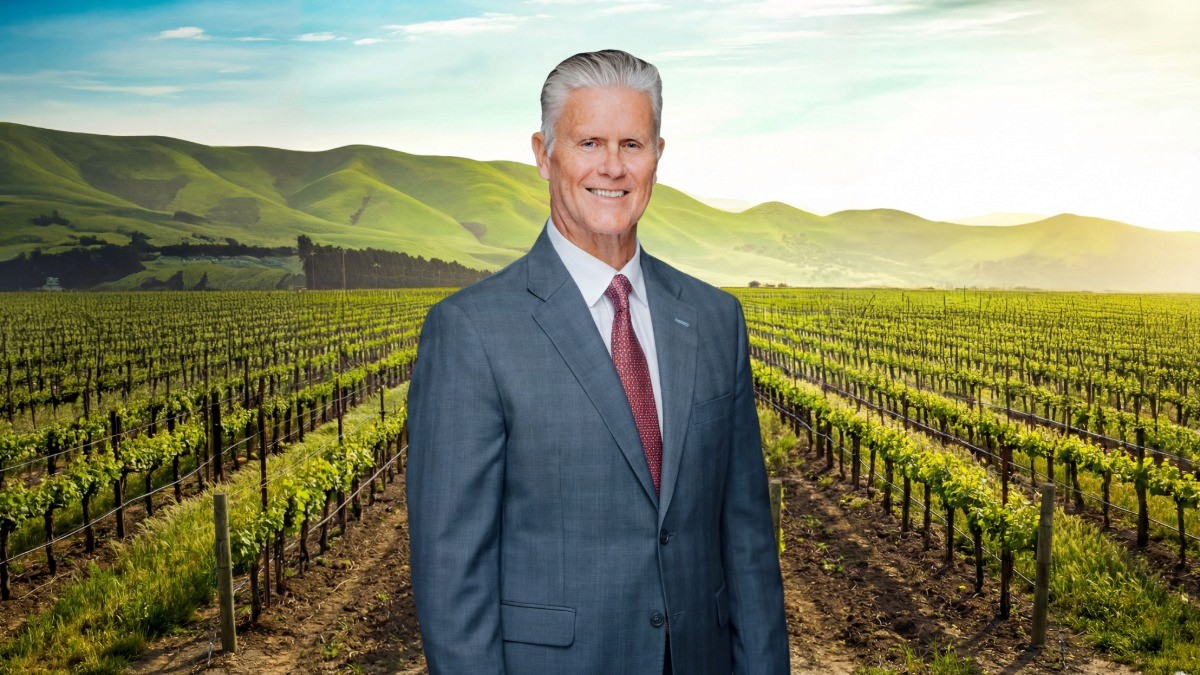
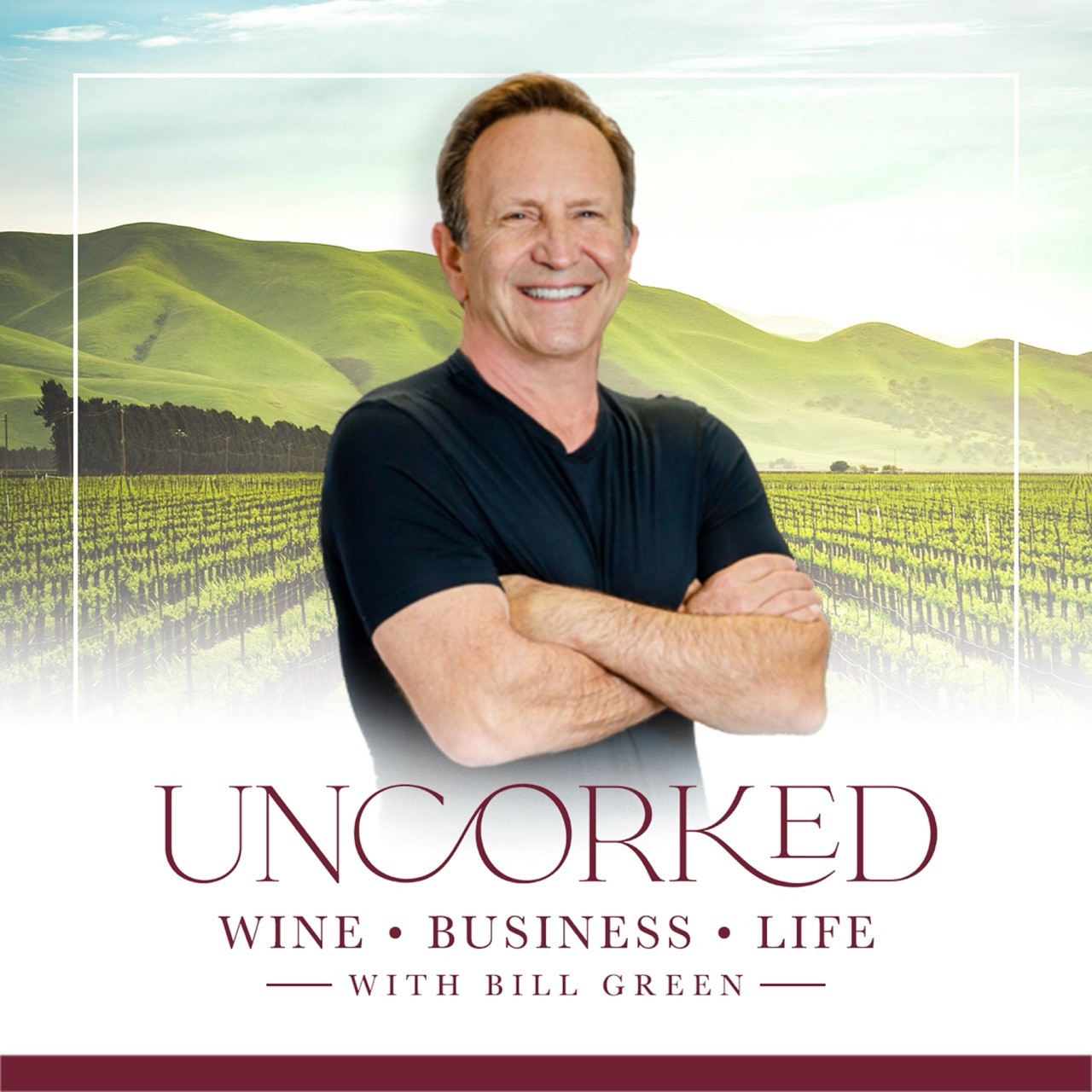
In Episode 18 of Uncorked: Wine, Business, and Life, hosts Bill Green and Jerrold Colton sit down with entrepreneur and investor Tom Meyer (Meyer Capital Group) to talk about how he built a career through decisive action, real-world risk-taking, and a sharp eye for opportunity.
Tom opens up about his early years, what it means to trust your gut, and why thinking fast and committing boldly has led to some of the biggest wins in his life. From lessons on momentum and resilience to mindset shifts around money and personal growth, this episode is packed with real, unfiltered insight from someone who's walked the walk.
Introduction to Saddle Hill Winery
Welcome to Uncorked: Wine, Business, and Life with Bill Green. I'm Jerrold Colton. Welcome to Saddle Hill Winery. We are in the barn—in the stable, actually—which was the original purpose for which Bill Green bought this farm. We are here with a very special guest.
We have my good friend of many, many years, Tom Meyer. Tom is the CEO of Meyer Capital Group, based in Marlton, but he does business in many places. It is so special to have you, Tom. I can't tell you how great it is to be in the barn. This is a first. It really woke me up when I walked in here. Let’s giddy up with the show.
A Decades-Long Friendship
We have so much history together. In 1989, Tom's beautiful wife, Debbie, came to work for me as my assistant. She was setting up her desk and her new wedding pictures, and I said, "Wow, you're married to Tom Meyer." I have known Tom since we were 16 years old. We just knew each other then; we weren't really friends. We both went to Camden County College for about a year. We knew each other, but we weren't close.
Then, sure as heck, Debbie becomes my assistant, we get together again, and it’s been amazing ever since. What makes me so proud of you as one of my closest friends is that I remember walking into your office when the name of the company was Financial Architects. I had all the money I had to my name: $20,000. I owned my company, but it wasn't really making much at the time.
Tom Meyer had $20 million under management. He started with $2 million in 1980, took over his grandfather's business in 1982, and hit $20 million by 1989. Today, he has $2 billion under management. And I have a little more than $20,000 now.
I have to tell you, he called me up and said, "Hey, listen, I want to give you my investment portfolio." This was 1989 or 1990. We met at the Elgin Diner. We’re sitting there, and he was having his usual egg white omelet and a baked potato with French's mustard. I thought, "What is this guy? He’s nuts." He said, "Here’s my investment portfolio." It was $20,000. He was proud as a peacock to have $20,000 to invest into the market.
Tom, you’ve built this amazing organization. I want you to share with our listeners the early years, navigating around your grandfather and taking over a business in that little house on Church Road in Cherry Hill. Give us the backstory.
The Foundations of the Business
My grandfather started a fee-only RIA in 1963. It was unheard of back then because Wall Street was all about product selling, loaded funds, contractual plans, and tax shelters. Here he is trying to teach me what an RIA is, especially a fee-only one. All my friends were out there driving BMWs and selling tax shelters, getting 10% off the top. I was making 100 bucks a week. I said, "Gramps, you better be right about this, because I’m learning a business that nobody even knows what it is."
He taught me the right way to do business while I got laughed at by brokers. At that point, I was a custody of Charles Schwab. They would say to me, "What is this Schwab thing? What is an RIA?" Believe it or not, they would ask, "What is a fiduciary?" because that was Wall Street.
All of a sudden, everyone that was laughing at me wants to be a fiduciary now. I don’t know what took them so long. We started with just myself and my grandfather. Then I added Maria, who is still with me after 40 years. I guess she likes me as a boss.
She’s seen all this growth. When we were in that little house, I would drive 100 miles for $50,000. I’d go have lunch with someone for $20,000, apparently. From there, I learned my grandfather was right: if you do what’s right by clients 100% of the time, the business will grow.
I had $20 million in 1987 before the crash. It went all the way down to $15 million, and then I built it back up to $20 million and added more employees. It’s a transition for an entrepreneur to cross that Rubicon into a corporate structure. That means delegation and trust. A lot of small businesses don’t want to go through that.
Growth and Rebranding to Meyer Capital Group
Bill helped me a lot with delegation. I'm still not as strong as him, and I never will be. But crossing that Rubicon to spend a little money was necessary. I got up to $80 million with maybe six employees. The margins were great, and I could have been happy right there.
But I decided to move forward. In 2001, I got up to nearly $100 million. I opened up the purse strings, moved into an office building, and hired three more people. A month later, 9/11 happened. The scale went right back down. When you’re fee-only, you don’t have commissions or trails backing you up. I actually had to take out a credit card and make two quarters' worth of payroll because I didn’t want to lay anybody off. I felt that strongly about the team I built.
Eventually, I gave Tom the lion's share of my investment capital. I was getting successful and being pitched by every major bank. I would always say, "I’m going to leave Meyer for Goldman or Morgan Stanley because they’re bigger." Honestly, every time I tried to "cheat" on Tom, I got my ass kicked.
Even though I do business with JP Morgan now, the majority of my stocks and bonds are with Tom. When most brokers are just walking into their office, Tom has been up for hours. He’s read the Journal and Barron’s. When I ask other guys about a specific stock, they say, "Let me talk to my analyst." Tom doesn't have to talk to an analyst. He is the analyst.
On January 1st, 2002, I had just left as CEO of my first company, Wilmar Industries / Interline Brands. I told Tom I needed an office because there was no way I was sitting at home at 43 years old. He gave me an office—maybe 8 by 8—with two screens and a Bloomberg terminal.
Something was bothering me about the name of his company, Financial Architects. I said, "You’ve got an awesome name. Meyer. Like JP Morgan or Morgan Stanley. Why would you be called Financial Architects?" It sounded hokey to me.
I'm a bit shrewd and Bill is always looking at the bottom line. He says the first dollar I earned as a paperboy, I stole. That’s a lie, Bill! But I relented. Bill’s "retirement" wasn't going to last; it's just in his DNA. Spending six months every day right next to him was brutal, so I put him to work. He brought in a team to change the name. I gave him a budget of $10,000—well, maybe $8,000—and he rebranded the company as Meyer Capital Group.
From there, we grew to $2.3 billion. Everyone has different talents, and Bill is one of the most creative entrepreneurs I’ve known. His brain never stops. He told me the name bothered him after 20 years, and I never thought about it as a problem. He’s the most savvy business person I know. He dove deep into my business and showed me the best way to grow.
The Fiduciary Advantage
I’ve had a problem with institutional wealth managers my whole life because I think it’s a lot of BS. Mostly they are salesmen who don’t really know the products. They serve a purpose, but Tom is Bill’s kind of guy. Bill studies everything and stays up late learning.
With Tom, it was his knowledge. It felt like talking to Jim Cramer from TheStreet.com. You could name any stock and he would rattle it off. It was a level of trust. He really cares about the clients; he's not just trying to make trades. I tell my friends that I pay a fee whether it’s up or down. If it’s up, we both make more. It’s a win-win.
Opening a 70-acre winery was probably the biggest gamble I ever took, but my trust in Tom hasn't wavered for years. As entrepreneurs, we learn from failures. We want to hire the right people because culture is vital. For individual investors, the number one priority is trust.
We have a tagline: Commoda Tua Ante Nostra. In Latin, that means "your interest before ours." That is how my grandfather taught me. I was up against Goldman, Morgan, Merrill, E.F. Hutton, and Kidder, Peabody & Co. There is no more E.F. Hutton or Kidder, Peabody & Co. We’re still here, so we’re doing something right.
What brought instant credibility was Charles Schwab being our custodian. In the beginning, we were truly independent. Then Schwab launched a platform for fee-only registered investment advisors. They now have roughly $10 trillion in assets. The fee-only RIA is the fastest-growing part of the money management business. It’s David versus Goliath, and we beat the dinosaurs. We created more transparency and lower fees.
Blind Wine Tasting at the Barn
We talk about wine on this show, and today we’re doing a blind tasting. One of the benefits of being friends with Bill is the amazing wine. Tom, your love of wine actually came with a great assist from Bill. In 1996, he called me to go to a wine auction at Sotheby’s in New York.
He picked me up in a limo and we went to the auction. That was my first experience watching him bid. Back then, they used clickers. He was bidding against restaurants all over the country, raising that paddle left and right. He didn't know what he was doing, but he bought crates of Bordeaux. I was there when he bought them, and they are worth a fortune today.
Let's try this Chardonnay. It got a little warm sitting in the barn, but take a taste. It begins with an R. Does it taste like Rombauer? That was my goal. Peter Szerdahelyi is an amazing winemaker here. The Myers and the Greens have drunk a lot of Rombauer Chardonnay together; it was our go-to wine. This is actually our 2023 Barrel Reserve Saddle Hill Chardonnay.
It hasn't been bottled yet. It was in oak for almost 18 months. Rombauer is pushing $50 right now, but for you to taste this and think it was Rombauer is a great compliment to the winemaker.
Strategic Partnerships and Succession Planning
It’s not just me at the firm; it’s the team around me. We discuss succession often. If I get hit by a bus, the team knows my clients and I know theirs. We do it the old-fashioned way. Like John Houseman used to say: we earn it.
Two years ago, I partnered with Hightower Advisors out of Chicago. In this business, if you do not have a full suite of services—estate planning, tax prep, tax analysis—under one roof, the business will fly by you. They brought that to the table. I kept my brand and my team. The only casualty was my wife, who was our HR director. She was ready to go after 20 years. She was out the door the next day.
Going from a solopreneur to having partners is a different ballgame. I have to go through procedures now, which is tough to get used to. But I no longer have to deal with compliance, technology, and HR. That allows me more time to grow the business. I feel like a free man.
Tom, you brought your kids into the business right out of college against my advice. I thought they should learn elsewhere first. But I am so jealous because you are knocking the cover off the ball with them. They have the utmost respect for you.
It was in their DNA. They were stuffing envelopes at the dining room table when they were five. With my oldest, Tommy, I tried to get him an outside job, but we had an opening and he started with grunt work. He didn't report to me. He was like a little lamb in meetings back then, but his growth over seven years has been amazing. My son Mark is the same way; he still does grunt work but he has evolved into a great team member.
The Impact of Coaching and Leadership
I’m not great at delegation, but I work at it. I'll pick up a piece of trash on the floor because I don't expect anyone to do anything I wouldn't do myself. I’m not on a pedestal. I remember CEOs of major wirehouses where employees couldn't even take the same elevator as them. At Saddle Hill, I have 100 employees, and I’m the one pouring this wine.
Let's go to the next wine. This is a 2009 Screaming Eagle, 100% Cabernet Sauvignon. It’s a 100-point wine. To buy it direct is $1,250, but at auction, it yields over $4,000 a bottle. We don't pour a lot of this!
Tom, how cool is it to work with your sons? It starts with coaching. I coached football, lacrosse, and baseball. Mark definitely got the brunt of me in football. But I do not act that way in the office. I treat them with respect.
During the 2008 market crisis, coaching those kids was my therapy. I always tried to end on a positive note. I once got a letter from a kid I coached thanking me for the confidence I instilled in him. Whether it’s football or business, you have to end on a positive.
My football coach at Cherry Hill West, Herb Fisher, was an absolute legend. He saved my life. My dad died when I was 16, and I was vulnerable during a heavy drug era. Football taught me dedication. I graduated in '77. I played with guys like Stuart Yaffa.
This last wine is a 1999 Chateau Lafite Rothschild. What a difference between Napa and Bordeaux. We went to Bordeaux in 2019, and we also visited Coach Dick Vermeil at his tasting room in Napa. He is the most inspirational guy. He coached NFL players who still rely on him today. He’s the youngest 88-year-old you'll ever meet.
Persistence and the Entrepreneurial Spirit
Tom, you’re still charging. I know who to call early in the morning to hear what the market is doing. Why put an end date on your career? At this stage, I want to do what I love. Getting rid of the administrative headaches makes it easier to enjoy life.
Bill, you "retired" for five months, and we knew it wouldn't last. You bought this place at 62. Every day isn't peachy, but you need the right partner. My wife and I had to make sacrifices early on while growing the business. A lot of entrepreneurs today want freedom and they want it now, but they don't want to work their butts off.
The grunt work teaches you humility. I tell people: don't be the smartest guy in the room. Keep an open door and an open mind. I’ve been doing this for 43 years and I learn something new every day. I have the utmost confidence my kids will do the same.
Bill, there isn't a better person to handle your money than Tom. You two are so similar. How much did I lose today, Mark? He still has that original $20,000.
This is the greatest thing you can have in life: friendship, family, and business all interrelated. Cheers to you, Bill. Thank you for listening, and we’ll catch you next time on Uncorked.