Business Titans
Stephanie Link: From One of 3 Women on a 500-Person Trading Floor to Wall Street CIO

00:0000:00
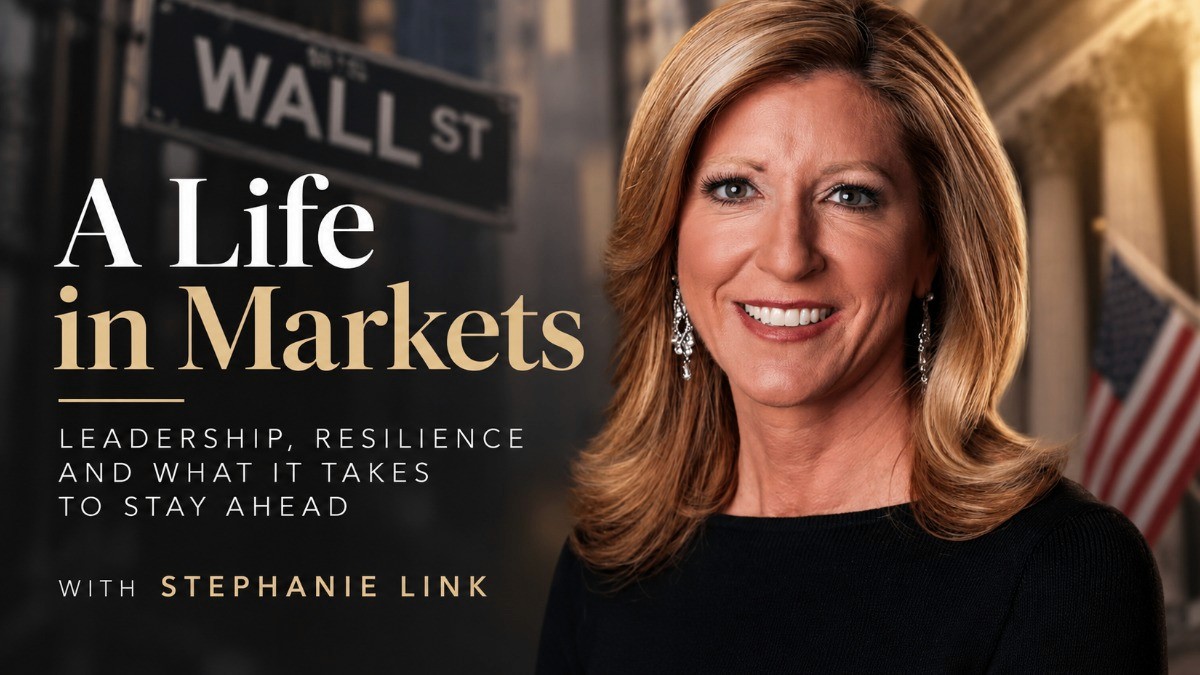
At 22, Stephanie Link took a seat on a Dean Witter trading desk with 500 people. She was one of three women, she sat directly across from the head trader, and she didn't say a word for three months. Thirty-five years later, she is Chief Investment Officer at Hightower Advisors, a regular voice on CNBC, and one of the most respected investors on Wall Street. On this episode of Uncorked, Bill Green sits down with Stephanie at his New Jersey vineyard to talk about how she got there.
Stephanie shares the habits that built her career. She arrived before the head trader every morning, became the top institutional salesperson at Prudential nine years out of ten, and then ran its research department. She also tells the story of calling Jim Cramer the night before her first day to turn down the job so she could stay home with her newborn daughter. His answer was to offer her three days a week at home, years before anyone worked remotely. That led to seven years together and some competitive 3 a.m. treadmill races. For anyone starting out, her advice is simple: find a mentor, show up in person, and surprise people by doing more than they asked.
Bill and Stephanie also talk markets. She explains why the economy has been stronger than she expected and why the AI boom is lifting much more than tech, including data centers, cooling systems, the power grid, and energy. She also covers why she won't bet against the American consumer and why she thinks we're only in the third inning of AI. In the lightning round, she reveals her first stock pick (it dropped 20% in a week), her favorite investing book, and the Andy Grove line that keeps her on her toes. And they do it all over a glass of Saddlehill's barrel-aged Chardonnay and Proprietor's Blend.
Transcript
Bill Green:
[0:00] Welcome back to Uncorked. I'm Bill Green, your host. This is the podcast where we bring together the best of wine, the best of business and life. On every episode, we crack open some great conversations with leaders who know what it takes to perform at the highest level, whether it's in the boardroom, the markets, or out in the field. When it comes to high stakes investings and market strategy, today's guest is one of the most recognizable figures on Wall Street. Joining me is Stephanie Link, Chief Investment Officer at Hightower Advisors, where her team manages over $8.9 billion in assets. Stephanie has spent 35 years managing money at the highest levels, from co-managing a $200 billion portfolio at Nuveen
Bill Green:
[0:49] To serving as CIO at The Street alongside Jim Cramer and appearing regularly as a contributor on CNBC's The Halftime Report, Squawk Box, and The Closing Bell. But long before the national television cameras and the billion-dollar portfolios, Stephanie started at the very beginning learning the hustle, carving out a path in the male-dominated industry, and earning every single step of her success through sheer work ethic. Today, we're diving into her personal story and how she navigated the pivot points in her career and what it takes to stay grounded through 35 years of high-stakes pressure and the lessons she has for anyone striving to reach the top of their field. Well, we're also going to touch on a little market outlook and how she navigates the economic uncertainty and, of course, how she finds balance outside the noise of the trading floor. Stephanie, welcome to Uncorked.
Stephanie Link:
[1:51] It's great to be here. That's such a kind introduction. Thank you.
Bill Green:
[1:54] You're welcome. It's really, I'm excited. We've been working on this for a long time now. And you're a busy person. And, you know, I see you all the time on CNBC.
Stephanie Link:
[2:04] And you're just fantastic. Thank you.
Bill Green:
[2:06] You know, I kind of have a little bit of a backstory with Jim Cramer.
Stephanie Link:
[2:08] Do you?
Bill Green:
[2:09] So when I took my first company private in 2000, I think the Philadelphia Inquirer did an article on us and he picked it up. And in 2000, the street was not what it is today and Jim wasn't what it was today. Sure. And he did a great article on us. And I was, I think, 36 at the time. And I ran into him. He's a Philly guy.
Stephanie Link:
[2:30] Yeah.
Bill Green:
[2:31] And he's a Sixer fan.
Stephanie Link:
[2:32] Mm-hmm.
Bill Green:
[2:33] And I was at a Sixer game, and at halftime, he came walking right past me. I said, Jim, I want to introduce myself. He hugged me. He said that you guys, because non-tech companies were getting crushed in 2000. Sure. Just because they weren't tech companies.
Stephanie Link:
[2:48] Right, right.
Bill Green:
[2:49] And he just thought it was brilliant. Anyway, and then I tried to get, you know, of course, I tried to get him endorsed my book. No response. You know, and maybe I can get him on my podcast. I doubt it.
Stephanie Link:
[3:00] I bet you could get him on your podcast.
Bill Green:
[3:01] You think so? Maybe with your influence, I could.
Stephanie Link:
[3:03] He comes to Philly games all the time.
Bill Green:
[3:05] I know. I got, hey, I have great courtside seats at the Sixers. Oh, wow. Now that we can watch LeBron, maybe I can convince him to do that.
Stephanie Link:
[3:11] You can invite me.
Bill Green:
[3:12] Oh, there you go. So we have a lot of things to talk about. That is going to be part of it. But I want to know, you went to Boston College. You come out of school. You're probably 22 years old, right?
Stephanie Link:
[3:23] Yeah.
Bill Green:
[3:23] Give me the start. I mean, you come from Bessing Ridge, New Jersey, beautiful area. But here you are. What are you thinking?
Stephanie Link:
[3:30] Well, I grew up and my parents were divorced very early when I was five years old. I was very close with my dad and my mom, and they helped me and really helped shape me growing up in different ways. My father was a branch manager at a company called Dean Witter Reynolds, and my mom was a teacher. And they both instilled upon me hard work and discipline in different ways. I watched my dad get up every morning. He would run the first early hours of the morning, like four or five o'clock. He would start with a run. He would come back. He would work all day. And I never really saw him, but when he would come home, he would tell me about his day. And I was very lucky that during the summers, I was able to go and work in his office. And I was in the back office. It wasn't all that much fun.
Stephanie Link:
[4:24] But I saw how hard my father worked and the ability to talk to people and communicate with people that I was like, wow, I hope I can do that someday. He felt so confident. He looked so confident. And I really wasn't. My mom was a teacher and she instilled upon me hard work, too, but just in a different way. And that was more schooling and doing well and getting good grades. And they both wanted me to have good grades, but I just observed. And that's what I feel like I do well. I just try to observe people in general. But I was very lucky that they were both really supportive of anything that I did. And I was just very lucky that we had the means to do it.
Stephanie Link:
[5:05] That being said, my mom, being a teacher, did not make that much money. And I lived with her and my dad did make the money. And I said to myself growing up very early on, I don't want to be dependent on someone. I want to be successful and I want to have the financial independence. And at the same time, my father would say, I want you to have the financial independence because it's really important. And so that was always ingrained in me.
Stephanie Link:
[5:30] And in addition, I think what really helped is I was a tennis player and I played tennis starting at three years old up until college and a lot of long hours, a lot of hard work. But that's what got me my first job because I happened to meet two people in the business at Dean Witter on a trading floor. They were in the business for a long time and they said, what do you like to do? And I said, well, I played tennis growing up and all of a sudden it was like, OK, say no more. If you are really competitive, you're going to be great in this business world. And so I had a nice upbringing, but I also wanted to be in an industry where you could be successful, that you could get opportunities if you worked hard, and you could also make money.
Bill Green:
[6:15] You know, it's actually interesting that you just said that, that you kind of work on your own, if you will. Yeah. Right? So you played a single sport. And I always, when I think about recruiting staff, I always look at folks that were excelled in team sports because I just think they're a better team player. And I never even thought about that tennis player thing. So I don't want to hire a tennis player as I'm looking for a good team player.
Stephanie Link:
[6:38] Well, I was on a team, so I just wanted to be number one. I love it. But I supported my teammates and I also played singles, but I also played doubles and that's also a team. I think the point is, is like anyone that's involved in sports, even when I interview people Now, anyone that is has done sports, you know, in the past, I think of them as, well, they had to put in the work. They had to have some sort of discipline. And I didn't understand that when I was being interviewed by these two gentlemen. I was like, why do you care if I play tennis or not? And they just wanted to know, well, what drove me? Why? Why did I play tennis? And also, I'm a runner. And that was the other thing they asked me to do of what I did. And they were like, why do you run? I'm like, it's like great stress reliever. And I get to just zone out and do my thing. And then they were asking me things like, well, what time of the day do you run? Do you run with a group? Do you not run with a group? And And what motivates you? And they were basically finding out my personality by involving sports and keeping me comfortable in the conversation.
Bill Green:
[7:44] Do you listen to music when you run?
Stephanie Link:
[7:46] I do.
Bill Green:
[7:46] Okay. I, I'm based newly retired from running and racing. And, um, I never listened to music cause I would, all my thoughts about business were always going through my brain. And, you know, this was pre-podcast, right. And, or when you couldn't, you know, we had tapes we put in our car. I used to call it my rolling university, you know, and now it's kind of different. And I would used to get upset at myself if I want, if I had an urge even to listen to music, cause I just wanted to be in that zone. It's great. So Stephanie, so you go, you're in, um, You start at Dean Witter. Yeah. You sit at this desk. You're probably shitting yourself, right? Yes. What was like the one shock culturally that you felt when you got in there?
Stephanie Link:
[8:26] Oh, I mean, like, well, there were 500 people on the trading desk. I was one of three women, and I was sitting exactly opposite of the head trader. So he was looking at me, and I was looking at him, and I was terrified. I did not say a word for three months. Three months. And then one day the trader, head trader, like made fun of me and I made a kind of a crass response back to him. And he's like, ah, we got her. We figured it out. And then from there, it was like, I'm going to be OK because I'm going to work my butt off and I'm going to prove that I deserve to be here. But at the same time, I'm going to. Learn from everyone around me and try to make friends along the way. You know how hard it is when you first start working. You have no time for anything other than just work 24-7 because I was a sponge and I wanted to learn as much as I could. I had to read every weekend. I had to read Barron's, the hardcover paper, three times because I didn't understand it. It's not a hard paper to understand, but when you're right out of school, right out of college, they don't teach you things that are in the newspaper. And so that's how I learned that. And I learned from the people, the great mentors that I had. It's totally different these days.
Bill Green:
[9:42] So you get, how do you think about when you were trying to build that initial place for yourself at Dean Witter and the mindset in those first few years on how you were building yourself? And like, how did you get psych yourself to say, hey, I'm going to be at the top of this office someday?
Stephanie Link:
[10:01] Well, I always wanted to be number one, as we talked about in sports, but I always wanted to be really successful. And I really was, I was lucky that my stepmother was also in the business and she was an FA and she was able to do really quite well. And so I would pick her brain a little bit. And I just think working hard, harder than anyone, under promising and over delivering, getting in the office, when everyone was getting in at 7, I got in at 6. In fact, the head trader got in at 6.05. So I purposely got in before he would get in. And that's how we also became friends and he became a mentor of sorts because we'd be the only ones in the office on this big trading floor just staring at each other.
Stephanie Link:
[10:48] And so I just put in all of the requirements to learn as much as I could. And I got to tell you, it was hard because there's so much going on in the markets. And being an institutional sales assistant and dealing with institutional clients that knew so much more than I did, that I didn't want to ask any dumb questions, but I wanted to seem smart. And oh, by the way, I lied about my age because I didn't want them to think that I was 22 years old. And at the time, I looked a little older so I could get away with it, but they all knew. And I just wanted to fit in, but also stand out. I wanted to fit in to understand the business, but then also for people to take notice that I wanted more than being an institutional sales assistant.
Bill Green:
[11:34] And so let's talk about timeframes. How long were you at Dean Witter until you started doing research? Yeah.
Stephanie Link:
[11:41] So after the first year of being a sales assistant, I got an offer from Morgan Stanley. To go and be a sales assistant over at Morgan Stanley. And I thought, well, I wanted to go. Well, they made a great offer for me to stay. So I stayed there, but they immediately made me a salesperson after one year of being in the business. And I had no idea what I was doing. And I mean, really, all I did was I just constantly called clients. I figured out a way to get them on the phone. Which is hard today. You can't get anybody on the phone. But I did whatever it took. I called them in the middle of the, you know, in the morning, in the middle of the day, in the end of the day, in the evening. I would constantly do whatever, you know, whatever it took for them to notice me. So that was important. And I built my book. They gave me a whole bunch of debt accounts.
Stephanie Link:
[12:29] I did some business with some debt accounts, and that was great, according to the management team. After four years, I left and I went to Prudential Equity Group and became the managing director on institutional sales. And I did that for 10 years. And I actually was the number one salesperson for nine out of the 10 years. And that was, again, really hard work ethic, working smarter and harder than anybody else, building relationships with clients so that they were your friends and so that you could have conversations and you build that trust. And I really enjoyed it. But after 10 years, I was then asked to be the director of research for Prudential Equity Group, which is where I was. And then I did that for about five years. And so after that, the firm closed. I had a baby and I did not want to be a salesperson anymore because it's a hard job. Institutional sales, I say, is a young person's job. It's a fun job. It's a great job. But I didn't want to do it having a family. And so I had a mutual friend introduce me to Jim Cramer, and he was looking for someone to help him run his portfolio.
Bill Green:
[13:37] The charitable foundation.
Stephanie Link:
[13:38] Yes, yes. At thestreet.com. So it was housed at thestreet.com. And it was small in terms of the amount of dollars that it had in it, but it's very high profile. And so I thought I would work with him for like a year or two, and then that would be my stair step into the buy side, into running money. I actually wound up working for him for seven years. And I'll tell you just a fun story about Jim Cramer.
Bill Green:
[14:03] Can you do boo-ah?
Stephanie Link:
[14:04] Can I do boo-ah? Oh, my God. No, you can do that. I'm not doing that. So before, so I met Jim for this interview and we met for about 30 minutes and all we did was talk about stocks. And it was, what do you like here? What do you like there? And we hit it off. He didn't even ask me much about me. And so after 30 minutes, he was like, OK, I think we'd love to have you join, the firm. And I'm like, OK, when do you need me to start? And he's like, I'm like, I can start like tomorrow if you want. And he was like, no, why don't you take a couple of weeks, enjoy your three month old baby, enjoy her and then start in May. I'm like, OK, this is like the end of March. And I'm like, OK, that's great. I'm like, wow, this guy really is nice. And anyhow, we come to the day before I was supposed to start. Here I was with my daughter for, you know, a month and I'm falling more and more in love with my daughter. And I'm like, I can't leave her.
Stephanie Link:
[15:03] And so I called him and my husband was like, what? What are you crazy? You want this job? I'm like, I know, but I'm so torn. And I've always wanted to have a career first. So this was really, it was hard. Anyway, I call him the night before and I'm like, Jim, I can't join your firm. And he's like, okay, 30 seconds of silence on the phone. And I'm like, that's a long time.
Stephanie Link:
[15:26] And I'm like, and he's like, why? And I'm like, well, I mean, I'm really torn about being with my daughter and then being at work because I know what it's going to take to be successful at work for you. It's going to be 24-7, and I'm not going to be home ever. And he's like, another 30-second pause. He said, okay, well, what would it take for you to come to work with me? And I'm like, I don't know. Could I work two days from home? This is way before anybody was working from home. And he's like, 30-second pause. How about you take three days from home, and you come and work for me for two in the city, and that tells you everything you want to know about Jim Cramer, the heart that he has. Now, let me tell you, working from home was no piece of cake. I worked harder when I was at home than when I was in the office, but it's a good story. And then I wound up working for him for seven years. I learned how to run money. I then went to Nuveen for five years and was the global research director there and also ran a portfolio. And then I switched over to the independent wealth management space because I do think that this is a growing industry, a growing piece of this industry. And I've been at Hightower for six years.
Bill Green:
[16:34] Okay. Good time to take a little pause and try our first wine. Oh, okay. Which is the Saddlehill Barrel Age Chardonnay, which is a unique Chardonnay in the fact that we age it in oak for 16 months. Most Chardonnays, or most whites, are harvested and they go right into the stainless steel tanks and six or seven months later they get bottled. And you will actually be able to taste the oak on the Chardonnay.
Stephanie Link:
[17:01] That's great.
Bill Green:
[17:02] It is absolutely my favorite.
Stephanie Link:
[17:04] Oh, that's delicious.
Bill Green:
[17:06] Isn't that nice?
Stephanie Link:
[17:07] Oh my gosh, so nice.
Bill Green:
[17:08] Now, I'm not, I don't have a good enough palate to say whether it was French oak or Hungarian oak or American oak.
Stephanie Link:
[17:14] I would never know. I would never know. But I did learn when we went to Napa Valley most recently that you're supposed to do short sniffs. Absolutely. I had no idea. Yeah. So that's interesting.
Bill Green:
[17:25] Well, the other thing people don't realize is you got to, why is there a stem? Because you don't want the heat from your hands to change the temperature of the wine. You always want to be here.
Stephanie Link:
[17:34] That's terrific. How many bottles do you make of that?
Bill Green:
[17:39] This is a small batch. I would probably, I think there's just 250 cases. So whatever 250 times 12 is. Yeah, it's not a lot. But it's also, you know, here we are in New Jersey, beautiful New Jersey. And I call, we have no problem selling wine on site. But liquor stores and consumers and restaurants, it's Appalachian snobbery. So this wine could be half the price, better quality, but it doesn't say Napa or Sonoma or Italy or France on the bottle, and it won't sell.
Stephanie Link:
[18:09] Really? Yeah.
Bill Green:
[18:10] It's really tough.
Stephanie Link:
[18:10] That's a shame.
Bill Green:
[18:11] Could you help me figure this problem out, Steph? I mean, you've read a lot of shit. This would be really cool because there's a whole industry right here and in other states too. Same thing in Virginia and Pennsylvania. New York has a little bit of an advantage because the Finger Lakes have such a well-known, but they're really known for their lighter, whiter, sweeter kind of wines. The big, bold, dry reds, which we're going to try next, you know, it's really a challenge.
Stephanie Link:
[18:36] How did you get into wine?
Bill Green:
[18:38] I was on my IPO roadshow. That's a great segue here. And I was in the Bel Air Hotel with my investment banker and my CFO. And he said, do you want a drink? So I said, I'm really not into wine. Yeah, gin or whatever. And come on, let's try some wine. And you're on your IPO roadshow. Yeah. Expenses don't matter, right? We're flying around in private chats. And I look at the list. I don't know anything. I just saw $850 for a bottle. And I said, gotta be fine. And it comes out and it's, I can't even, Mouton Rothschild. Oh my goodness. Okay, so sure as shit. I go, oh, wow, that could really be good. Now, even then, that probably, wine was probably worth $150 a bottle in 1996. Oh my goodness. It was really expensive.
Stephanie Link:
[19:25] Yes.
Bill Green:
[19:26] And I did the road show. Two and a half weeks later, I came back and I called a friend of mine who worked at a liquor store and I said, Charlie, teach me about wine. Really? The rest is history. And then I was a wine collector for a lot of years. Still, I'm a wine collector. And then five years ago, I decided to buy this farm.
Stephanie Link:
[19:41] Wow.
Bill Green:
[19:42] Chet. For myself.
Stephanie Link:
[19:45] That is awesome. Well, it's so beautiful.
Bill Green:
[19:46] Really, really, really. Anyway, so let's talk about mentorship. Was Jimmy your first mentor?
Stephanie Link:
[19:53] My first two mentors were the two people on the trading desk at Dean Witter. I was so lucky. I literally fell in it. I just sat next to two people as close as you and I are at these two chairs. That's how close I was to two people, they flanked me. And every day, we would start the day with them. They had a morning call, and I had no idea what they were talking about. All the analysts would come down and do their presentations. And I got to turn to my right or turn to my left and say, can you please explain what that analyst just said? And what are the most important pieces that I should learn and know? It was better than an MBA, better than a CFA, all day. Those were my first two mentors.
Bill Green:
[20:38] Is there any one thing that stuck out of the advice that you got from either one of them that shaped your career?
Stephanie Link:
[20:46] Yes. In their individual ways, they basically would encourage me to stay focused and to stay patient. And, you know, being an institutional sales assistant, you're doing a lot of menial tasks. You know, I was going downstairs to get the pizzas for the traders, right? I mean, I was faxing, you know, I was copying. And, you know, I just after a year of doing that, I, you know, it was frustrating. And they both said, you stay patient because, We can tell your work ethic is going to take you places. And what they would do is they would I would say, well, where do you see me going? And they're like, well, why wouldn't you go from institutional sales assistant to salesperson? And then maybe more. And they and they would say, you're doing such a good job and you're so ahead of what other people have done who have worked for us. And I wasn't do I didn't think it was anything special. I was just kept my head down and I stayed away from I mean, water coolers don't even exist anymore. But I had to stay away from the water coolers. No gossiping, no nothing, wearing professional suits. I spent a fortune on suits because I wanted to look professional too. And so it was like the whole package. And they both said, just stay calm. It's going to happen for you.
Bill Green:
[21:57] So Stephanie, I normally talk about other stuff other than business later in the interview. This is really important to me because you run it a thousand miles an hour. Yeah. You got a child. You got a husband. You got a home. You're on TV all the time. You got a big job. But you also find time for the pidgery school and being on the investment council and doing pro bono work. How do you balance all that stuff, right?
Stephanie Link:
[22:25] It's hard. I don't have a lot of time, but you have to be organized. And I am almost anal, very, very organized. And I will also say, though, I could never do it without having some help along the way. And we were very lucky when my daughter Georgia was three months old. We went to church in Basking Ridge, downtown Basking Ridge, and we dropped Georgia off into, you know, the area where the babysitters were. And a woman took her and I could tell she was just so sweet and so wonderful. And when I went to pick her up after church, I said, do you have a job? What do you do during the week? She's like, no, I'm back from Costa Rica. I just got back from Costa Rica and I'm looking for a job. And I'm like, would you like to work with me and my family? And she, to this day, still works for us. And I could not do this without her. My husband couldn't do it. Georgia couldn't do it because of such intense hours and so much that we had going on. She's now my house manager and she now takes care of my pets, my dog and my two cats because Georgia's in college. But I think we were all just so very, very fortunate to have some help along the way. But staying organized and making, I used to make lists all the time. I was known as the list maker, not only at home, but at work as well.
Bill Green:
[23:51] What a surprise. What a surprise. So you have a lot of accolades, savvy ladies to change. I mean, there's been so many articles about your career and being this high producing woman in a man's business. What advice would you give to young women that want to follow the same path?
Stephanie Link:
[24:12] That you can do it. I wasn't sure I could do it. I didn't even know if there was a path for me when I first joined. And so that's why having those mentors were so important. And I would say, so find a mentor. I always say this to young people, find a mentor, whether you're working for that person or not, male or female, probably on the older side, not older, but older than you and someone that has perspective that can kind of calm you down during the tough times, that can lift you up in the good times and can teach and coach you. That's super important. And I think the sky is the limit, but you have to be willing to put in the hours. The hours are, unfortunately, it's really about the amount of time you're put in. I wish I could say it's not the case anymore with technology. You could get a lot of things done. But I said earlier, you have to work harder and smarter than anyone else. But believe it or not, people still need to see you in the office. I know everyone, like we have these hybrid schedules these days. So it's really hard. It's probably harder for that generation than it was for me because I had to go into the office. They had to see me. I would say go in the office as much as you can. Don't be that hybrid person and make sure that that your your bosses and people around you know that you are there and you want to be there and you want to succeed.
Bill Green:
[25:27] You know on that note um i actually was not watching cnbc this morning sorry about that i was watching i was on
Stephanie Link:
[25:33] Too darn it oh.
Bill Green:
[25:35] Shit i was watching espn love it but anyway so they were interviewing the youngest starter on the sixers lineup and obviously lebron coming to philly and he said and they said well Well, you have to, he goes, LeBron was, you were two years old when LeBron was starting the league. He goes, oh yeah, man. He goes, I can't believe I'm playing with this guy. And he goes, and I get to the gym and he's already been there an hour. Uh-huh. And you hear the same thing when people talk about Larry Bird and the same thing to talk about Michael Jordan. They just, they had a thousand shots in before everybody else showed up and you're probably the same way in your, in your world.
Stephanie Link:
[26:12] 100%. In fact, when I did work for Jim, who was also a mentor to, we used to, we're both really competitive. We used to see who got on the treadmill earlier each morning. It was three o'clock in the morning. And we would, who would email first? And every single day we would do it, whether I was going into the city or working at home. And it was this competition thing. But to this day, he still works super hard. And he has a work ethic like no other. I've never seen such a thing. And I tried to learn from that. I always had a good work ethic, but he really went overboard. And I wanted to I wanted to be better than I wanted to do more than he did.
Bill Green:
[26:53] Yeah. And it's actually kind of interesting that obviously we have a both we have a very dear mutual friend, Mr. Tom Meyer.
Stephanie Link:
[27:00] Yes.
Bill Green:
[27:00] Tom's a lot different than a lot of the wealth managers or hate to use the word stockbrokers. And, you know, when I walked into Tom's office a lot of years ago, all the money I had, which was 20 grand. And I gave it to Tom because I really didn't know any different. But over time, what I watched was by the time I when I talked to Tom at nine o'clock in the morning before the market opened, he was already up and already digested Barron's in the journal. And that's what it takes.
Stephanie Link:
[27:29] Yeah.
Bill Green:
[27:30] And other guys are walking in at 915 because they have to be at your desk by 930. And they don't know jack shit what's going on. And it's really about work ethic,
Stephanie Link:
[27:38] Right? And being curious, too. um and also by the way this is definitely tom being nice being fun let's not.
Bill Green:
[27:47] Get carried away
Stephanie Link:
[27:48] Oh he's one of my favorites but you can do this without being mean like i have i've worked with some really mean people you don't have to do that you could be nice and just really try to help people along the way not i mean i'm i mean you know i'm competitive and i'm cutthroat to a degree but I also have sensitivity too, because what's life all about? Yeah, we want to be successful. You want to make money. You also want to have fun. And that's really important. And that's why I've been in this business for as long as I have, because I learn something new every single day. And goodness, it is humbling. I have been wrong a lot. And I think you will be wrong a lot in any career. It's what you do with that. Do you learn from it? Do you grow from it? But at the same time, you try to find good people around you who can lift you up and people that are even better than you to bring you up.
Bill Green:
[28:40] Yeah. I mean, surrounding yourself with good people makes you look really good. But, you know, I say that regardless who I'm mentoring or what business or I'm coaching a staff member, it's, hey, everybody makes mistakes. Yes. We're never going to get it all right, whether it's a hire. The travesty is that you didn't learn anything from it. A hundred percent. Right. And even when, you know, like, I've hired thousands of people in my career. And I guess I've gotten it right a lot, but I've also gotten it wrong. And the mistakes I've made were that I didn't fix my mistake right out of the gate and say, oh my God, why are they still here three months later when I knew after two weeks they didn't belong? So that's it. So let's go to the next wine. Sure. This one is really interesting, not necessarily for the Cabernet Sauvignon grape that there is. This was, so when I bought the property five years ago, we started planting grapes, but we knew it'd take multiple years to finish the planting. So we had a lease vineyards in New Jersey. So this wine is our Cabernet Sauvignon and it is from a vineyard that's not a winery in Vineland, New Jersey called the Ashenfelter Vineyard. And Orly Ashenfelter is a friend. He's retired now. He's a Princeton professor and he's one of the nicest guys. But one of the things about this business, and I just had an opportunity to meet some of the best people. So I love talking about this wine because he's such a cool guy and he's the chairman of the Wine Economist Association in the United States.
Stephanie Link:
[30:03] Oh my goodness.
Bill Green:
[30:04] Yeah, and he's really smart and he'll tell you how New Jersey is on the same plane as France and why we shouldn't be able to have the same wine while our soil is different. Different, yeah. This is great.
Stephanie Link:
[30:18] I love this. Yeah, I love it. You're so lucky to have it.
Bill Green:
[30:22] And just for comparison purposes, let's go right to the last one, which is our Proprietor's Blend, which is a combination of five grapes, Cabernet Sauvignon, Cabernet Franc, Merlot, Malbec, and Syrah.
Stephanie Link:
[30:36] Wow, that's a combination.
Bill Green:
[30:38] Oh, right? Doesn't it pop out? Yeah. It's a classic Bordeaux blend. And you could just kind of, boom, it just kind of hits you in the nose, right out of the gate. I can tell by this that this satin oak longer than the other one. This is good.
Stephanie Link:
[30:50] Too. They're all good. This is really good. I'm going to have to buy a bottle of this.
Bill Green:
[30:54] I'm going to
Stephanie Link:
[30:55] Have to buy a bottle of this.
Bill Green:
[30:57] No, you can't buy anything here. We have a beautiful gift for you. You did drive here, right? Yes. From Basking Ridge.
Stephanie Link:
[31:03] Oh, right. Yes. I'll be drinking these. That is really, really good.
Bill Green:
[31:09] So let's talk about the crazy markets and being the chief economist, strategist, investment officer, you're getting questions every minute of the day. Where are we going? What's going on? So give me your 30,000 foot. The market has been, I sold my last business in 2001 to Blackstone and I did really well. And I'm about diversification and balancing. I had already had a bunch of stocks and bonds. So I bought a winery, which is not good investment advice.
Stephanie Link:
[31:45] But you're having fun.
Bill Green:
[31:46] And then I do a lot of real estate. Okay. So I'm kind of in a situation now where I look at my stock and bond portfolio and I go, ooh, I smile.
Stephanie Link:
[31:54] Yeah.
Bill Green:
[31:55] And then on the real estate side, there's a lot of work and a lot of hand-to-hand combat because you don't have to be a rocket scientist that made money in the last five years in the market.
Stephanie Link:
[32:03] Well, and you said it. Everyone does feel like a rock star. It's going to be interesting when we do have a down year. Usually that's when I get the most phone calls and wanting the most meetings. Although our friend Tom, he always asks me no matter what, if markets up or markets down, he still wants to. Have me out here. I would say this. I think the most surprising thing, and I've been a bull for a while, but the most surprising thing is how strong the economy actually is. And I mean, I started the year thinking we would grow something like, you know, two, three percent, which is above trend. Trend is like one and a half. And I thought earnings would be eight to 10 percent growth. We just posted 50 percent earnings growth last quarter. We're growing because we have this revolution in AI and what I call kind of the food chain, which is not only the hyperscalers they're spending and they're spending a trillion dollars this year, but, it's the other industries, the other sectors that are also benefiting.
Stephanie Link:
[32:57] It's the data center makers. So it's the industrial companies. It's the stuff that goes inside the data centers. That's the chips and the software and the cooling systems. That's the grid upgrading the grid because 75% of our grid is 25 years old. And power, and we don't have enough power. So think about all of those sectors. It's not just technology that's winning from this revolution. It's all of these sectors. And these other sectors are like, maybe they grow like 3%, 4%, 5% a year. They're up enormous amounts as well because they're benefiting and they're seeing enormous backlog. So that's a big part of the growth. The other piece, and the thing I get the most pushback on is the consumer. The consumer continues to spend. By the way, we are a nation of spenders, whether we have the money or not, but they have the money because they have the jobs. That's the most important thing. There's one job available per one unemployed person in this country. And so it's a good market. You have 4.1% unemployment. That's on the low side. So you add it all up and they're spending. And of course, this is the consumer is 70% of GDP. So.
Stephanie Link:
[34:06] Both pieces that are driving this growth. And we only care about this because how it feeds into earnings. And I just mentioned we grew 50 percent in earnings last quarter. We're not going to grow 50 percent forever. We're probably going to grow like 20. But I mentioned earlier, I thought eight to 10. But because we have so much momentum in the economy, we're seeing better earnings even more than I thought. And at the end of the day, it's really, really simple. Stocks follow profits on the way up and on the way down. And we have, for the last three and a half years, seen earnings revisions higher. And so that's why the markets have done well. That's not to say that I'm not worried about interest rates, because I am. 5% tenure is, or higher for a sustainable period of time, you're going to get people that switch or sell some stocks to put money into 5%. I can get 5% risk free. That sounds pretty good. I get that. But I still think stocks are really where you want to be over the long term. Of course, asset allocation, you want to diversify into real estate. You want to have private equity. I get all that. But I think you really still want to have a big chunk of your money in equities because the long term total return is 8%. In the last 10 years, it's been 10%. That's a nice return. I mean, I know you have it. It's volatile. You're up and down and up and down, but, you know, kind of, kind of ignore the day to day, ignore the month to month and just kind of dollar cost average and don't look at it every day.
Bill Green:
[35:30] Yeah. That's the hardest thing for me. I don't necessarily look at my specific portfolios, but I kind of just, but you've been around the block long enough to remember March of 2000.
Stephanie Link:
[35:42] Oh yeah.
Bill Green:
[35:43] Feels kind of toppy.
Stephanie Link:
[35:45] Well, here's the interesting thing. So we've had a nice run, but the multiple on the S&P 500 has contracted 17% year to date. So we started the year at 23 times forward estimates for the S&P 500. We're now at 19 times. So it's not, okay, average is anywhere from 17, 16, 17. We haven't seen this kind of growth in a very long time. So, you know, you certainly want to give the benefit of the doubt and have a little bit of a higher multiple that you're willing to pay. At the same time, earnings are going higher. And then I would also say beyond MAG7 and beyond technology, there are other sectors in the market that are even cheaper than 19 times forward estimates. I think that's where your value is. And you definitely want to have tech exposure. But I think some of the other sectors, as I mentioned, industrials, financials, some discretionary, I think are attractive here. So we might just churn for a little bit. That's okay. But what we've seen is the first half of the year, we saw everything non-tech do well, like a broadening out. And then over the summer, we had it go right back to MAG7 only. I think we're going to probably continue to broaden out because I do think, again, earnings will be good, but it's not going to just be technology where earnings are good. It'll be across various different sectors.
Bill Green:
[36:59] Yeah, and what blows me away is uncertainty is one of the biggest challenges. Of course. And here you have, you know, this AI is going to, you know, it's going to be in the humanity in 10 years if we don't put guardrails on them. We're in a ridiculous war with Iran. We still have the Israeli-Gaza situation. We got a president that throws reporters out of the White House. We've got so many weird things, unprecedented things going on. That's got to have an impact at the end of the day.
Stephanie Link:
[37:29] Well, so I worry about every single thing you just said. But I would have thought, saying all that, we would be down 10% instead of up 11%. I know. So that speaks to that there are some other things that are more powerful and driving beyond these worry points. Look, I worry when I don't worry, because that means I'm complacent. So I always worry. The market always climbs a wall of worry. That's kind of the old adage. If you get wrapped up in it, you're going to miss opportunity. And so that's why you have to think a little bit longer term. I just don't understand what would, or I can't think any of these things would derail the two pieces of the economy that are doing well. Maybe the consumer could slow down, certainly, if the war lasts longer, inflation spikes higher, oil spikes higher. But even in the face of higher oil prices, the consumer's spending, as we talked about. So I think it's that AI piece that I just don't think, We're anywhere close to it being over. I think you're in the third inning in AI.
Bill Green:
[38:29] Yeah, I just get nervous that the consumer debt keeps climbing.
Stephanie Link:
[38:32] It does, but delinquencies and net charge-offs are actually falling. So the quality is they're paying off this debt. And actually, they're saving a little bit more because, again, they have jobs and the wage growth is about 3.5%. So there's always stuff to worry about. But what I will say this in my 35 years, I have it's always been wrong to bet against the U.S. consumer. We are a nation of spenders, whether we have the money or we don't have the money. And right now they have the money.
Bill Green:
[39:01] Yeah.
Stephanie Link:
[39:01] For the most part.
Bill Green:
[39:03] All right. Well, I'm going to ask you, and I mentioned to you that this is about inspiring other young folks and that look at Stephanie Link and say, wow, I want to be her someday.
Stephanie Link:
[39:15] Oh, gosh.
Bill Green:
[39:16] Oh, yeah. Come on. I mean, we got your shit together. I do, but. Give that recent college graduate some advice that's thinking about getting into financial services.
Stephanie Link:
[39:29] Well, I think it goes back to all the things that we talked about, but I think you have to be willing to put the effort in. It goes to reading as much as you possibly can, trying to and asking questions as much as you can, finding people in the industry that you look up to, reaching out, being aggressive, but not being offensive. And I think having a really good attitude about, hey, you know what? I got to hunker down, especially in the first part of my career, because I've got to outshine every single person else. I got to really make an effort and to always be curious. And when someone asks you to do something, you go over and beyond. And even if they don't ask you, figure out what you think they're going to ask you and try and put something together for them. Just surprise them. Surprise people that you work with on the positive side. Be kind. Stick to your knitting. Keep your head down.
Bill Green:
[40:33] Really great advice. All right. So this is my favorite time of the interview. We call it the lightning round.
Stephanie Link:
[40:39] Okay. All right.
Bill Green:
[40:40] So I'm going to ask you some questions. Yeah. One word, two words, short answers. You're sitting down after the closing bell, young cork, a bottle, red or white?
Stephanie Link:
[40:51] Oh, that's hard. Red, I think. But I like white, but red, I think.
Bill Green:
[40:56] All right. So the markets are down 500, which is actually nothing today. Phones are ringing off the hook. What do you do to step away and reset?
Stephanie Link:
[41:04] I tell the people that are calling me to turn the TV off. I turn the TV off. I mean, I really want you to watch me and all that, but negativity sells. Positivity is boring. I am a positive person. So stay focused, turn everything off, go take a walk or a run.
Bill Green:
[41:20] Okay. First stock you ever bought?
Stephanie Link:
[41:23] Oh, my goodness. The first stock that I ever bought, Lotus. Remember Lotus?
Bill Green:
[41:27] Oh, my God. One, two, three.
Stephanie Link:
[41:32] I did. And when I bought it, it fell like 20% like the next week after I bought it. Oh, my God. So, yeah. And then they got acquired, of course. But, yeah, no, that was, we had a great technology analyst and he convinced me.
Bill Green:
[41:43] Oh, that's really interesting. I remember that. Oh, my God. So if you had one best piece of advice that you would give a young investor starting out today.
Stephanie Link:
[41:54] Dollar cost average.
Bill Green:
[41:55] Okay.
Stephanie Link:
[41:55] That's the best piece of advice.
Bill Green:
[41:57] That's such a discipline that, oh shit, I owned a stock that was, doesn't matter, 30 bucks. And now it's 20 bucks. I'm going to buy more. You should. So hard.
Stephanie Link:
[42:07] I know. It's an emotional business. But you know what? Buy low, sell high. And you know what? You can own an ETF. Buy the Vanguard. If you're first starting out, buy the Vanguard S&P 500, have, the Vanguard take the money from the bank and have them take it out every month, every quarter. It could be $20, it could be $200, but you will never write that check. That I learned from my dad.
Bill Green:
[42:32] Is there a single market quote or rule you keep pinned near your desk?
Stephanie Link:
[42:37] A single market quote? Well, I probably just used it. Buy low, sell high.
Bill Green:
[42:42] Buy low, sell high. All right. Now.
Stephanie Link:
[42:45] Oh, I would also say one other thing. Yeah. Because I refer to this all the time. I would say only the paranoid survive.
Bill Green:
[42:51] Only the paranoid survive.
Stephanie Link:
[42:53] Yes. That was Andy Grove, the late Intel CEO who wrote the book, but the quote is, stay, stay paranoid. Oh, yeah. Stay focused. Stay scared a little bit. Not terrified, but just stay a little bit. It keeps you on your toes.
Bill Green:
[43:10] I use that rule of thumb and some of the people that I've had, even I've had multiple businesses, and I tell my folks, I live scared.
Stephanie Link:
[43:18] Yeah, totally.
Bill Green:
[43:20] What do you mean you live scared? You have a great business. You make a lot of money. I say, you know what? There's a competitor out there who's thinking how to kick my ass. So if I don't have a little bit of an edge to me that is really nervous, paranoid, scared, however you want to say it, man, you're going to get caught sleeping at the switch.
Stephanie Link:
[43:37] For sure.
Bill Green:
[43:38] So this is great, but I want to know, you're probably up at 5 a.m., coffee?
Stephanie Link:
[43:42] Four.
Bill Green:
[43:42] Four, okay, four. Market futures. What are you doing? What's your...
Stephanie Link:
[43:47] First thing I do before I can do anything is just get my workout clothes on and get downstairs to my treadmill and go for a run. And when I run, I listen to music. You asked me that earlier offline. And I have a big mirror so I can watch myself as an ugly runner. And I also watch sports. I DVR any sport and I watch it on tape delay because I'm watching it in the morning. So like I watch the Eagles on Monday.
Bill Green:
[44:13] Well, you have to be a Giants fan.
Stephanie Link:
[44:14] I am a Jets fan. I know. Wow. I'll always be a day behind. So, but it keeps me, it keeps me focused. Keeps me like distracted. And I love sports.
Bill Green:
[44:25] If you look back at your Boston college days, is there any one thing that stands out that was just a great, great memory?
Stephanie Link:
[44:33] Oh, it has to be my friends. I mean, that was something that they were, they're lifelong friends and, They're salt of the earth. But I will tell you, the reason I went to Boston College is because of Doug Flutie and the excitement. And I was young. I was in high school and I went with my friend. Her sister went and we went to the mods and we had a fun party time and I was sold.
Bill Green:
[44:55] Okay. Last question. If there was any one book every leader should read.
Stephanie Link:
[45:01] So that would be Peter Lynch, one up on Wall Street. So that's how I invest. Peter Lynch was a great investor. He was at the Magellan Fund at Fidelity from 1977 to 1990. His annualized return was 29.5 percent, better than Warren Buffett. And he said, and this is how I invest, invest in what you know, invest in what you see, invest in what you experience. That's the start. That's how you, that's your first screen. And I've learned so much from my friends I've learned from my daughter it's a great book Stephanie.
Bill Green:
[45:33] Thank you so much for being on Encore you were just amazing I really appreciate it you're just unbelievably fantastic I know you're going to inspire thousands and thousands of people to our viewers and our listeners thanks for joining us for another episode of Encore hit subscribe and we'll see you next time