Sports & Icons
How a Horse-Loving Journalist Built an Emmy-Winning Travel TV Brand Without a Network
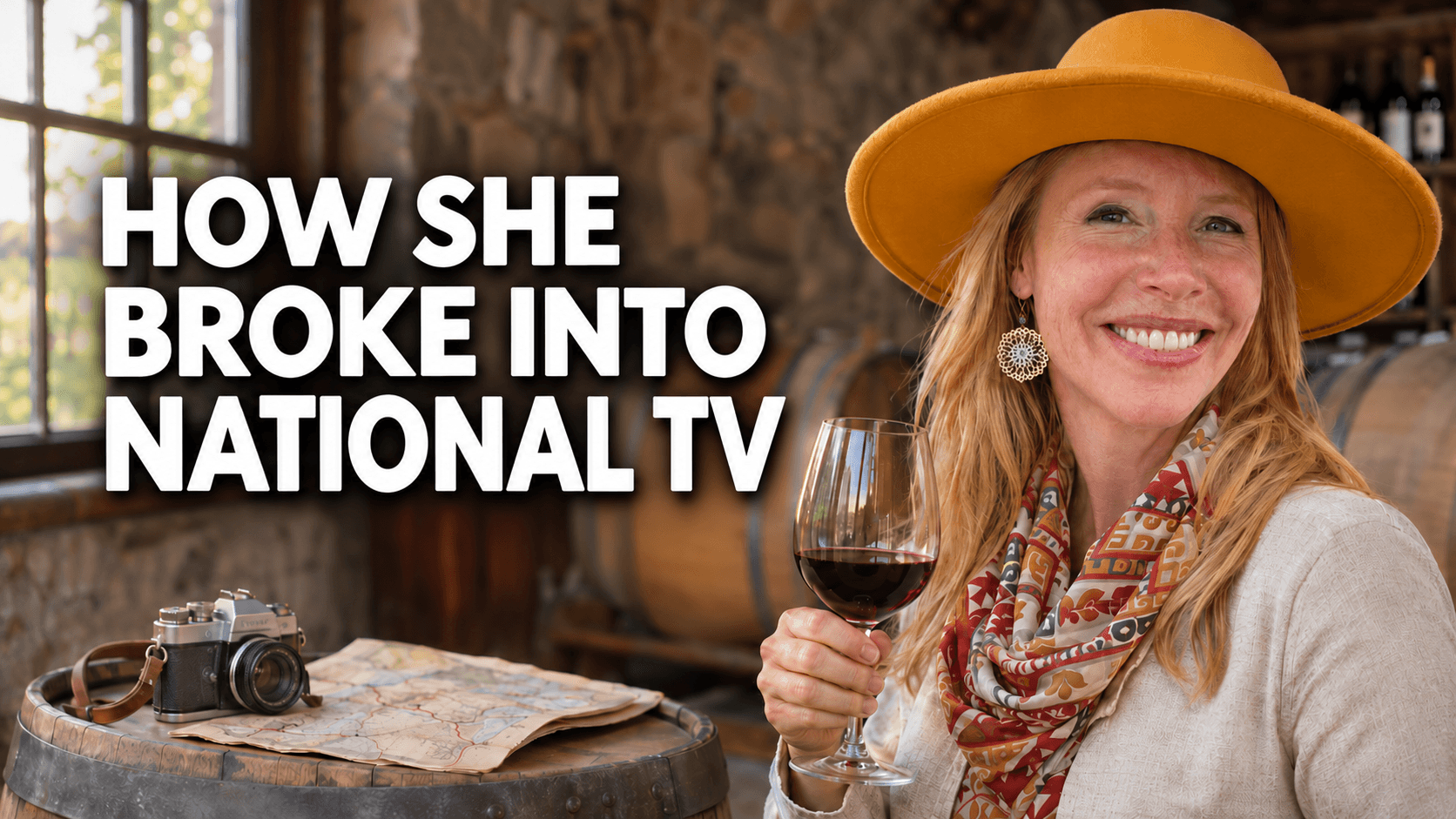
How do you build an Emmy-winning travel TV brand without a network deal? Emmy-winning producer and host Darley Newman tells Bill how she did it, over three wines at Saddlehill Winery.
Darley Newman is the creator and host of Equitrekking, the first travel show to explore the world on horseback, and Travels with Darley, both seen on PBS and Amazon Prime. She studied radio and television at GW and worked at CBS's 48 Hours before deciding she would rather be outside with a camera. Her new book, Revolutionary Road Trip, takes readers to the places where the American Revolution happened.
Darley explains how she sold the sponsorship for her own pilot, put it on Horse TV and one PBS station in New Mexico, and grew it into a show now on airlines, Tubi and Amazon. She talks about the civil rights trail shoot that kept her from quitting after COVID, why she writes her shows to stay evergreen, and why trying and failing beats waiting. Bill pours Saddlehill's Barrel-Aged Chardonnay and Proprietor's Blend, and puts the blend up against a $350 Pomerol, before a Lightning Round.
Resources:
Darley Newman: https://www.darley-newman.com/
Revolutionary Road Trip, Darley's new book: https://www.darley-newman.com/book
Equitrekking: https://equitrekking.com/
Saddlehill Winery: https://www.saddlehill.com/
Connect with us:
Apple Podcasts: https://podcasts.apple.com/us/podcast/uncorked-wine-business-and-life-with-bill-green-co/id1793929791
Spotify: https://open.spotify.com/show/4CNIHth57Gha41OCYoWaUL
Instagram: https://www.instagram.com/winebusinesslife/
LinkedIn: https://www.linkedin.com/company/uncorked-wine-business-life-podcast/
Newsletter: https://uncorkedwinebusinesslife.com/newsletter
From childhood filmmaker to CBS 48 Hours
Bill Green: Welcome back to Uncorked: Wine, Business, Life. I'm your host, Bill Green. You know, in every episode, we dive into the intersection of passion, grit and building something extraordinary. Today's guest is someone who took a single childhood love for horses and transformed it into a global Emmy Award-winning television empire. She's a producer, writer, entrepreneur and host, best known for creating two massive PBS and Amazon Prime series, Equitrekking and Travels with Darley, with three Daytime Emmy Awards, nine nominations and distribution in over 85 countries. She's traveled the globe exploring local cultures, food and adventures right alongside the locals who know them best. Beyond the camera, Darley is a master brand builder. She pioneered micro-niche digital video before online streaming was mainstream, authored award-winning travel books, built digital media networks and turned niche passions into a sustainable international media business.
Darley, welcome to Uncorked.
Darley Newman: Thank you so much for having me. And it's been great to spend time here at Saddlehill.
Bill Green: Yeah. Well, we appreciate having you. And this is going to be a very wine-forward episode, because you and I had dinner last night, and we had the opportunity to taste a few of Saddlehill's wines. So now I have a couple more, and I actually have one that's not Saddlehill's that I think would be really cool for us to talk about. So Darley, you went to GW. Obviously, you majored in journalism. Talk about the early years and how you kind of got all this started.
Darley Newman: Yeah, I mean, I was filming stuff when I was a kid, when we had old-school cameras. I had friends in the neighborhood doing commercials. I had my own little horror film I made my family get involved in. So I ran the neighborhood talent page.
Bill Green: You were one of those pain-in-the-ass kids running around. Okay, got it.
Darley Newman: I was like, "I'm gonna film you." I was like, "Watch out." This is, you know, early days, before we even had cell phones. So I was really out there.
Bill Green: Now you're dating yourself.
Darley Newman: I know, I know. But no, I've always loved to be creative and ended up going to GW studying radio and television, working a lot in DC. I worked at a talk radio news service, covered the White House, and I was up at Capitol Hill, and I did not like politics, but I did like media and I liked storytelling. And so went on to pursue it and moved to New York, worked at 48 Hours, and...
Bill Green: Yeah, I wanted to go dive into that. I mean, that had to be the pivotal moment, right?
Darley Newman: You know, it was pivotal because I was thinking that, first of all, I don't want to be in an office. I did not want to be in an office setting. I was working up in New York in this office building that is in a former factory or something that CBS has. And I didn't even have a window in my area. And I would go down the back stairs to get outside. I would jog. If I had to work late, I would go for a run or something and come back. And I would be sweaty and I didn't care, because then people were like, "Where did she go?"
And I was like, I can't just be inside like this all day. I love to be outside. I love the outdoors. So, you know, I thought, I've gotta figure out something that I can do where I'm out filming and doing travel stuff. I really wanted to travel. So I married my passions for travel with horseback riding and started the world's first horseback riding travel show. And this was before we even had the word "content creator." So I was an OG pioneering content creator back in the day.
Bill Green: Yeah. And so did you ride as a kid?
Darley Newman: Yeah. I rode growing up in South Carolina and North Carolina. Actually, I started at summer camp. That was kind of my first taste of it, when I was six, seven years old, going to camp early and just getting introduced to horses and saying, this is something that's so different. It's something that's so powerful and magical. You know, you're a horse lover. You have a winery with horses involved. So there's just something special. So I didn't know I would go on to do that as part of my career. But you know what's funny? My name is Darley. And I don't know if you know this, but one of the founding sires for the Thoroughbred horse is the Darley Arabian. It's spelled the same way. I always felt like that was just so random.
Bill Green: Well, maybe that was just meant to be.
Darley Newman: I know, right?
Bill Green: Okay. Yeah. And your parents weren't horse lovers, and maybe there was some kind of connection?
Darley Newman: My mom loved horses too, but I don't know that. Yeah, they didn't. No, it's a family name. It's a last name in my family. So, you know.
Bill Green: Let's talk about CBS and 48 Hours. That had to be just a ton of fun, young person moving to New York. "Hey, I work for CBS," right?
Darley Newman: I mean, it was cool. I will say, you know, I was covering... it's 48 Hours, so it's murder, right? Someone's always getting murdered. And that show still goes on today. It has a great formula. But it did get me... I was out of the office for that show some as well, and I was going around and pre-interviewing people and kind of getting my boots on the ground in the journalism world, and went on to do a lot more jobs that would be out in the field, because I realized I really liked that. So it was pretty pivotal to be there.
But I also thought, being there, that they were never going to move me up, because I had friends who had been working there, and people I met who had been at CBS for 10, 15 years, and they would only go an inch up the ladder. And I thought, that's going to take too long for me.
Bill Green: Not a lot of patience?
Darley Newman: Yes, I don't have a lot of patience. I was like, that's going to be too long. I can't do that. So.
Launching Equitrekking as an independent producer
Bill Green: So talk about... you woke up one day and said, "I'm going to do a pilot for Equitrekking."
Darley Newman: I did, yeah. And this, again... well, I started a website back in the day where I was doing videos of myself doing these horseback riding and travel videos. And it got cited in the New York Times early on, back in 2006, 2007, as being a pioneering site for putting niche video online. This was when people were just starting to do online video. I used Brightcove back in the day. We weren't even using YouTube at that point. So yeah, but I had this idea to do a show. I wanted to do a travel show. And I thought, what could I do that would be different than everything else that's been done?
And that's a hard thing to think about sometimes, you know. And now that I've done so many things, I don't think you have to do something completely different, you know, but I did. At that point, I was like, I want to do a different travel show, a travel show no one's done. And I was like, I'm gonna do a travel show where I show people what it's like to ride in these beautiful places. It was a pretty big idea.
Bill Green: Really big.
Darley Newman: Yes. I went out and I got sponsorship for it, and I put a pilot on a network called Horse TV. This, again, was when niche networks were starting to do broadcast and streaming. So that's kind of how I got it started. I went out and fundraised for it. I sold the advertising for that show for the pilot episode and did the pilot. And then I took the pilot and got it on one PBS station in New Mexico, and then I did a New Mexico pilot down there. So it was a bit of a building process. It was not the traditional way to do something. I didn't go just pitch it to someone and they paid me and I did the show and they owned it. I was like, "This is my show. I'm gonna do it this way."
Bill Green: You know, you need to be less modest, because it won three Daytime Emmy Awards and it's broadcast in 85 countries. So.
Darley Newman: It did really well. I mean, again, you know what was so interesting? Because people thought, "Oh, what is this show?" When I would describe it at first, people would say, "But who wants to watch it?" They're like, "Well, I'm not a horse person. What would I get from it?" And I was like, well, it's about the people, it's about the places. It is about the horses, but it's about culture, it's about exploration. It's seeing things in a different way. And that's what I always try to do with the content I produce, is show people something in a different way.
Tasting Saddlehill's barrel-aged Chardonnay
Bill Green: And tell me about... wait, you know what? I think this is a good time. You know, last night we drank three reds. So our first wine is, we call it Barrel-Aged Chardonnay. It's basically our steel Chardonnay that just hung out in oak barrels for 16 months. I happen to love it. Because it sits in barrels, it's probably a little on the pricey side for New Jersey Chardonnays, but cheers.
Darley Newman: Cheers. Yay. Ooh.
Bill Green: I mean, if you like it full and oaky. I mean, honestly, I said to my winemaker, I said, "Look, I love Rombauer Chardonnay. Make it for me." And he said, "How am I gonna do that?" And I said, "Well, you're gonna try." And I'm not saying it's exact, but it's pretty damn good.
Darley Newman: Yeah, it does have... again, I don't know what it is. Your wines are very smooth. That's one thing I would say about all of them. This definitely has that oak bite to it, but in a smooth way, if that makes sense.
Bill Green: Yeah. You do get a lot of roundness in all of our wine. They're just smooth and velvety. But I just love this. I don't need food to drink this wine. This is one of the few. Now, what would you pair with this? I feel like cheese, some kind of cheese would be great with this.
Darley Newman: I mean, cheese goes with wine in general, but this in particular, I think.
Bill Green: How about those, our signature chicken wings?
Darley Newman: Oh, those would be great, yeah.
Bill Green: Wouldn't that be great, because they're kind of a little bit of a herby kick to it?
Darley Newman: Yeah, yeah. But this is a hard... in my mind, it's a hard cheese, Almond Tar, that kind of...
Bill Green: So it's actually a shame for me. I don't do well with dairy. So I always try to find foods without the cheese. But yeah, this would... It would really go great. Hey, so, this is my kind of show. We take little wine breaks. No, yeah, we just drink, 'cause we help you down the steps after the show. That's why we limit it to 40 minutes. Anyway, talk about the top 20 ranches.
Travel TV on the road and the civil rights trail
Darley Newman: Yes. I started a website that was showcasing the best ranches, too. So I spent a lot of time traveling around, obviously, and riding in different places. And it was a lot of ranches, but I went to Ireland, to Jordan, to Botswana, to South America, to Uruguay. But again, all the travel that I do, I love also profiling places in the United States, because so many people want to travel, they want to go abroad. But again, there are so many great places that are so diverse in Colorado and Montana, and those are places I was also trying to share with people.
Bill Green: I mean, doing a travel show is the most expensive way you could possibly go about it. You didn't just slide in there and do something on Madison Avenue, right? I mean, it's... yeah. Schlepping around your team, your photography team, and...
Darley Newman: Well, and also more cumbersome in the earlier days than it is now. All equipment's gotten smaller, more adaptable, better. Drones are flying around. Now they can follow us automatically. And yeah, it's really changed a lot. But it's always hard to travel, though. Even now with the great equipment, it can be hard to travel and do a show. So in that regard, it hasn't necessarily gotten easier, but it has.
Bill Green: Yeah. What were some of the pitfalls that you ran into early in your career? And what were some of the challenges? Did you ever have a kind of "oh shit, I quit" moment?
Darley Newman: I think, you know, I've never been like, "I quit," but I've definitely had times when I have said, I don't think I want to do this anymore. So during COVID, I had to stop. I didn't travel at all and film. And I ended up doing other things and live streaming a lot, actually. I love live streaming, and that was something I worked on during COVID that was pretty cool. And also, I would reshow old episodes during COVID and bring people on for live streams, and it was quite fun. People loved it. I loved it too, and like, reunite cast members from the show. But after the vaccine came out and we started traveling again, I did one of my first episodes in Alabama along the Civil Rights Trail, and it was really hard to get around and film at that point, and we had to film all of our interviews outside.
And I was on that shoot thinking, I don't think I want to do this anymore if it's going to be this hard to do everything. You know, this is difficult, it's really difficult, and the travel was so hard. But then I interviewed women on that shoot who lived through the civil rights movement and captured their stories. You know, what happened when they were kids and having these trials and tribulations, and the Selma to Montgomery March, and so many... I had Rosa Parks' protégé, who slept on Rosa Parks' couch when she was a kid, and she was, you know, as a teen, campaigning for the NAACP. And telling those stories, I thought, wow, I'm doing something that is really impactful, because I'm getting to share stories and having people tell me in their firsthand voices their story.
And those shows went on PBS, they've gone to streaming. I did Smithsonian live streams that were in colleges and universities. And a lot of people learned from those shows and heard those firsthand stories from these women that had remarkable stories. So that kind of changed my perception of what I was doing in a way, because I thought, this is really important and it's something different.
Revolutionary history and agritourism at Saddlehill
Bill Green: And then, so you definitely slant toward doing historical things. So talk about... which is why you came to Saddlehill to interview me and understand what was so special about our property during the American Revolutionary War.
Darley Newman: You know what? And I love it, because there are a lot of stories that people don't necessarily know. And then it's not until you speak with someone like you where you get the real story. So you can read stuff online, but when you tell a story firsthand, I just think it changes it for people. And also, being on the property, there's a different energy.
Bill Green: Absolutely. Because I gotta tell you, I had, you know, I went in pretty deep on that thing, and it was a personal project, and, you know, I co-wrote it. And it was kind of like... I have some friends that will tell me the absolute truth, and they go, "Okay, great, who cares?" And you gotta... I like history. So to me it was like, "Oh, would you believe?" Like, "Oh yeah, all right, great. You know, where are we going for dinner?" So, but that's probably 80% of the audience that's gonna really not care. Or do you think differently?
Darley Newman: I think it's different, because I think it just changes... it gives depth to the place. It really does. And when you know the history of a location, I think it gives a different depth. But then again, I do think that there's something different about hearing it from someone who lives here, right, living on the property, really absorbing it. It just comes across in a different way. I think you should put some markers out on the property if you can.
Bill Green: Some what?
Darley Newman: Some signage about it.
Bill Green: So we are being reviewed right now to be an historical site.
Darley Newman: That would be so cool.
Bill Green: So, you know, obviously we don't have any historical buildings, which is good. But no, being on an historical trail would be great. And you know, we played it up this year on the July Fourth week, and we were actually on a South Jersey historical trail. So, you know, it's a lot of fun. But agritourism, you know, we have an opportunity to do something really special. And if you travel around, have you gone to any of these farms that are basically resorts? And I mean, it's awesome, right? I mean, it just feels good.
Darley Newman: No, it is. I think it's really interesting. I love when there's animals, horses, alpacas, sheep. And then you can taste what's on the menu that may have been some of the ingredients grown there nearby. I think there's something different about that that's really nice. And just connecting more to our roots, our agricultural roots, is important.
Reusing content and the Revolutionary Road Trip book
Bill Green: Oh, I wish everybody thought about this kind of stuff like that. Hey, talk about... you partnered with some major brands, Ralph Lauren, Starz Encore. Talk about that. How do you get that over the finish line?
Darley Newman: Yes. So, not easy as an independent throughout time, actually. But yeah, I've done a lot with taking content over the years that I think is good content and reusing it in different ways, which, again, is the name of the game today as well. You know, we take our podcasts and we put them on social. But I've actually historically done that in different ways as well. So even with my Equitrekking show, I ended up taking the content and recutting it for interstitials for Starz Encore's Westerns channel back in the day. And again, it was an early kind of content reuse project, but they had me go in studio and redo all the voiceovers and put in kind of commentary on Western movies that had been filmed in the locations where I went horseback riding.
So it was just a very interesting creative project and something that I thought was cool. But yeah, I do that today too with the shows that I do. I put them into podcasts, and I just wrote another book that is out, on sites related to the American Revolution and places people can visit to get those.
Bill Green: Oh, wow. All right. I gotta get a copy of that.
Darley Newman: Yes. Revolutionary Road Trip, which is a whole subseries that I have going as well, that takes you to... and that's the reason I wanted to come here, too, to learn about the revolutionary history. Because, again, many people thought, "Oh, what's interesting about that? It happened so long ago, how does it relate to me?" But I think, first of all, when you can combine food and drinks in any of these locations, it makes people say, "Oh, maybe I'm interested in that." But then also, a lot of these places, you meet local stewards of this history, or volunteers or preservationists, and it brings the history to a different level.
Proprietor's Blend and work-life balance
Bill Green: Yes. Hey, let's go to the next one. So this is actually the cousin of that last wine that we had at dinner last night, which was the Scribe. And this is called the Proprietor's Blend. I'd call it my second favorite to the Scribe, because it's named after me. But this is a classic Bordeaux blend: Cabernet Franc, Cabernet Sauvignon, Merlot, Malbec, and this one has some Syrah as well, which the Scribe didn't. This was not in oak as long as the Scribe, but I gotta tell you, this is really good. And then the last wine we're gonna try is the same blend, but from Bordeaux. So when you taste this, put your memory palate on.
Okay. Really nice, right?
Darley Newman: Yeah, and I taste more of the Merlot in this.
Bill Green: Absolutely more. Yeah. It's a deep kind of deep, rich wine.
Darley Newman: Mm-hmm.
Bill Green: But again, smooth. But I like... you know, it's kind of like I like my coffee big and dark. I like everything, my wines... everything big and bold, yeah.
Darley Newman: Bill is bold.
Bill Green: Even my cigars that I'm not allowed to smoke anymore. Yeah, that's a nice one too. Really a good one. Again, it's on the upper end of the price scale for New Jersey. But when a wine takes so long in barrels, it's all about labor. It's all about labor and overhead and so forth. Hey, so you wear a lot of hats. You self-produce, you're a writer, you're moving, you're traveling. Let's talk about work-life balance, because I suck at it. How do you do it?
Darley Newman: Well, a lot of times I don't think of what I do as work, even though it is, because I love what I'm doing. So they're all kind of projects for me. I almost think of everything as a project that I want to work on, because I do spend a lot of time creating, writing, thinking about what's next. And so I don't probably have the best work-life balance if you were to think of everything as work. My friends will often be like, "What are you doing this weekend?" And I'm like, "Oh, Saturday I'm gonna work, do some writing, maybe do some editing, kind of research for what I want to do." But I'm like, "I'm happy to meet you Saturday night. I'll need a break by then." And they're like, "Oh, you worked today." And I'll say, "But it really wasn't work for me." I don't know.
I do feel like it's almost a mission at this point, because I love collecting stories. And I feel challenged by... I've done a lot in New Jersey and the state of New Jersey. And I've done a lot in South Carolina and New Mexico and certain places, and North Dakota. I've done a lot in places where people haven't covered those places or stories as much. And that makes me excited, because I'm finding something that people haven't shared as much about. Because I think, you know, the more we can all learn from this stuff, the better.
But, you know, I enjoy being outside. I bike all over New York City. I live on the Upper West Side, and I do hot yoga. I eat great sushi and I drink good wine.
Bill Green: But it is kind of amazing that you have a media business that's surrounded by travel and going to farms and horses, and you live in Manhattan. Where's your garden?
Darley Newman: Yeah, it's Central Park right now. Yeah, it is. No, I'm not there as much as I could be. So, you know, I am traveling a lot, so I feel like I'm getting the best of both worlds. I love New York. The energy is amazing. And there's so many interesting people. Honestly, I always meet so many interesting people that are doing cool things. And I just think New York has a great energy, but a great vibe as well. I always say New Yorkers are super friendly, but maybe that's just what it is when you're more open.
Bill Green: So, I mean, like you said, it's not really work because you just enjoy it so much. I mean, I feel the same way when I really get into something. When I'm building Saddlehill, it's been a seven-day-a-week project, and it's still a project. But certain things, I could hunker down on a Saturday afternoon, and maybe just something with AI got my attention, and I'm mesmerized, and I wanna see it through. This is not work. I am definitely not looking for a payday at the end of the day, right?
Darley Newman: Yes. I mean, I just wrote this book, and, you know, some people told me not to write it, actually, because they're like, "It's gonna take too much time, and it won't be as monetized as other things you might do." But I was like, you know what, though? I've now documented for five years these stories. They haven't been written in a book. A lot of them have not been in history books. So I kind of felt like I had a mission to do it. And I would get up super early. I was traveling as I was writing it. I would be in, you know, hotels. I was at a casino hotel in Iowa and Illinois, and I was up looking for that coffee at 4 a.m. when people were probably coming back out of their night. I was like, "I am up, gonna write this book."
So it's kind of a labor of love and passion still today. I mean, I started out doing Equitrekking because I wanted to see the world, I wanted to horseback ride, I thought it would bring people something different. And now I'm kind of doing this with different stories in history and travel and culture, and kind of for the same reason.
Managing a small crew and keeping shows evergreen
Bill Green: Well, we should have arranged a ride.
Darley Newman: I know.
Bill Green: The next time you come back, we have to definitely get on a ride. I mean, yesterday was just probably one of the prettiest days to ride. Hey, so let's talk about the business side of this, right? Usually, creative people like yourself hate managing people.
Darley Newman: Mm. Yeah.
Bill Green: But you have to adapt, right? You got a production crew. Talk about that. Talk about how you get the best out of your team in really weird environments.
Darley Newman: I have a small team, and everybody is really good. So that's one thing. They're all super talented in very specific and different ways, but everybody's multitalented. Henry and Greg and Chad doing photography, they can do drone, you know, they can shoot with different cameras, and they see things very differently, and you need that for sure when you're traveling and trying to capture beauty. So that's super key. And then Janice and Evelyn, who work with me, who do consulting producing, they are great at finding stories and looking for something different as well. So everybody is good in different ways, and I think you definitely need it, because I try to do too much still to this day on my own, so I'll always have to try to not do that.
It is difficult, but yeah, it's all about finding the right people to work with, and to transition and grow in different ways, I think, nowadays, because the media and the climate's been changing so much over time. I mean, I've worked hard to get the show not just on PBS stations and public television, but on all these different streaming outlets. It's on six airlines now, in flight. Scripps News just started broadcasting it. It's on Tubi and Amazon. It's going to schools and libraries across the world through another distribution system. So that is really me out there trying to meet people and say, "I have this great content, and it should go to these places."
Bill Green: Do you try, when you write your scripts, to keep them timeless? Don't talk about, like, "Oh, did you see..." I'm making this up... "who won the game yesterday," "What did Trump say yesterday," or something like that?
Darley Newman: Yes, I do, because my show, Equitrekking, started in 2007. It went till 2012, and it just got sold, resold. It's going on UP Entertainment. It's now going back to Tubi and Amazon. I'm launching it newly on my YouTube channel. And a lot of the content is really evergreen, because it's a great nature show. But with Travels with Darley, we've also covered restaurants and food, and, you know, places could close over time. But it's always about more than what is there. So if it's a restaurant, it's more about what the dish is and why it's regionally interesting and what's local about it. And keeping it so that even covering the 250th commemorations and the anniversary of America, we've done it in a way that we're not necessarily saying "this is the 250th year" in the show content, because we want the shows to last over time and be educational tools for the long run. So I've tried to make it evergreen.
Pomerol vs. Saddlehill: the third tasting
Bill Green: Yes. That's what, you know, this podcast... we try not to talk about the weather yesterday. Let's try the last one. Do you remember what the one we just had tastes like? You remember?
Darley Newman: Well, for me, it was more Merlot, but yeah.
Bill Green: Okay. So now go to the last wine. And this is a 2000 La Conseillante. It's the Pomerol region, which is a very Merlot-forward blend. Okay. And this is Bordeaux.
Darley Newman: This is different. It's different. Mm-hmm. A little more earthy. You know, I can... It's less sweet than the last one, I think, but...
Bill Green: Did you say less sweet?
Darley Newman: Less sweet. Yeah.
Bill Green: I just think that the Saddlehill, there is no sugar in it, so it's really not as sweet, but it's so much more fruit-forward. So somebody that's a true Bordeaux snob, they're gonna like this. But this is, I don't know, $350, and the other one is $46. So personally, I don't think there's a big quality difference, and there's a heck of a price difference.
Darley Newman: Oh, that's so interesting. I've been to Bordeaux. I filmed two episodes over there, beautiful. But you were saying yesterday, and you were sharing with me in general, about the differences in the soil, which I thought was really interesting.
Bill Green: Rocky, gravelly soil. Much better drainage. So when we get a lot of rain, even though we have decent drainage here, it still hangs around. That's really the difference. And I'm not a viticulturist, and I'm not a winemaker, but I know what I like, and I know enough to be dangerous. So yeah, this is really a good one. But being able to go to these countries and filming a show about horses, which would be kind of cool... are you a good rider? Because I'm okay, I'm mediocre.
Darley Newman: I always tell people that I don't ever say I'm an expert. I'm definitely not an expert, but I've ridden so many horses now that I could definitely hold my own.
Bill Green: Can you stay on if he rears up?
Darley Newman: I have stayed on.
Bill Green: Okay, there you go. Good night, ass is on the ground on that one.
Darley Newman: It just depends on where we are and what it is, but I've definitely ridden through some difficult situations.
What's next for Darley Newman
Bill Green: Hey, so when I talk to you and watch your stuff and read some of your works, I kind of feel you're just getting warmed up. And you got a lot left in the tank here. What's next?
Darley Newman: Yes. Well, I'm loving leaning into the history and collecting stories from people who are still alive, who have history to share. Living history, I think, is super important. And also sharing history that people don't think they're interested in, that makes them feel connected to each other. Because I think that's important. I think that's what life is about, is us feeling more connected to each other and realizing why we're here. I think many people walk through their lives and they don't think about the fact that it's a short life. And I think about that all the time. So I think I am just getting started, because I'm excited to dive deeper into topics that mean something and make a difference for our American citizenry and for the world, and to share these stories that can be evergreen stories that people can learn from for a long time.
The Uncorked Lightning Round
Bill Green: That's really great. So we also have something that's called the Lightning Round. All right? So I'm gonna ask you some questions, and you can give me a one-word answer or you can embellish. Whatever you want to do. All right. Out of all the places you've traveled, which destination took your breath away the most?
Darley Newman: Botswana, Africa. Yeah. I always tell people that was my favorite, not only because I survived an elephant charge there, but because it was so different and beautiful, and it really made me appreciate our planet so much more. And wildlife, being out in the wild. Amazing.
Bill Green: Amazing. I did that trip. It was really amazing. And then we went, you know, to other places, but on my bucket list is gorilla trekking in Rwanda. Yeah. And I was actually looking at it yesterday to see what the best month to go was. And that could absolutely be an early '27 trip.
Darley Newman: My girlfriend just did it this year, and it's another one that people say is life-changing.
Bill Green: Yeah. Yeah. That's definitely on the bucket list. Okay. You can go anywhere for a ride in the world. Where are you riding?
Darley Newman: I would like to go to Argentina. I've been to Uruguay and ridden out with the gauchos on the pampas there and on the beaches. It was amazing. The food was so good, the steak was great, the wine was good. But I think Argentina would be also very exciting, and it's so diverse. So that's a place I'd love to trek across.
Bill Green: Yep. Okay. Now, when you have a long week and you're tired, what's your go-to wine or drink in the glass?
Darley Newman: Sauvignon Blanc.
Bill Green: Oh, and that's what we didn't try. Oh, my God.
Darley Newman: Yeah, or a Sancerre. But, you know, they're very similar. But yeah.
Bill Green: Okay. Well, Sancerre. Yeah, that's becoming more popular. Sancerre. All right, what's the single biggest piece of business advice that you've received in the past that you live by today?
Darley Newman: I think trying things and not being afraid to fail, because we all are gonna fail in some aspect or another, and it's really important to keep going.
Bill Green: Somebody in particular give you the advice?
Darley Newman: You know, many people have told me that. But then also, I was just at the Theodore Roosevelt Presidential Library out in North Dakota, and that is a big part of what he believed in. He has this "Man in the Arena" speech, where it's all about, let's just get out and do this, because you're gonna fail, but you're gonna be the one that was courageous enough to try. And that is just important sometimes. A lot of people wait and wait and wait on things they wanna do, and they don't try. And you might fail. But it might teach you something that you didn't know. You might end up doing something completely different that you didn't think you would do, just by trying that one thing. So.
Bill Green: Yeah, I mean, failure is really part of the learning process. And, you know, there's many failures, and there's macro failures, and there's all different kinds of failures. When I think about life lessons, if you don't learn from those failures, that was a waste. And we see a lot of people making the same bad decisions over and over again. All right. Now I need a one-worder. Okay. Describe the entrepreneurial journey in just one word.
Darley Newman: Invigorating.
Bill Green: All right. I love it. I love it. That's great. I could just tell by hearing you talk this is definitely not a job for you, and you can't wait for the next thing, and learning. And it's really awesome to get to know you. Really exciting.
Darley Newman: Yeah. I think it's really fun to be curious, and I'm so glad... I mean, I really love hearing from other people. I would love to turn the tables and interview you for your podcast. I think it's so interesting.
Bill Green: Great. Great. Well, thank you so much for being on Uncorked. To our viewers and our listeners, thanks for checking in with us, and we'll see you next time. Have a great day.